




India's Finance Minister Highlights Economic Resilience Amid West Asia Conflict
West Asia conflict ‘systemic tremor’, moving from shocks to permanent volatility: Finance Minister Nirmala Sitharaman
 The Indian Express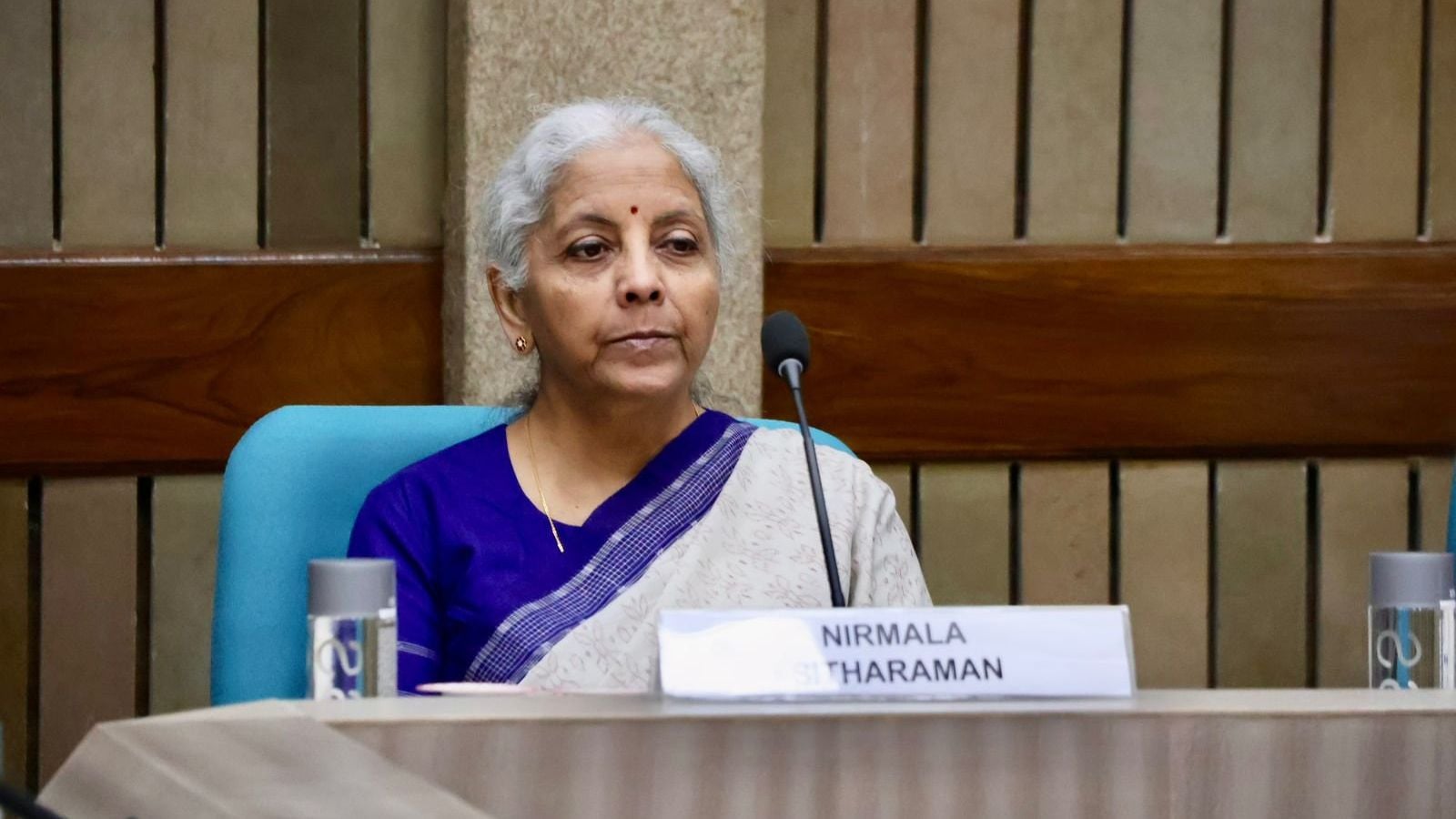
Image: The Indian Express
Union Finance Minister Nirmala Sitharaman described the evolving West Asia conflict as a 'systemic tremor' impacting global stability. She emphasized India's fiscal discipline, which allows for strategic economic support, contrasting it with other nations facing high debt and deficits. India's debt-to-GDP ratio is projected to improve significantly by 2030.
- 01Sitharaman characterizes the West Asia conflict as a shift to permanent volatility.
- 02India's fiscal discipline allows for economic support during downturns.
- 03India's debt-to-GDP ratio is projected to decrease to 75.8% by 2030.
- 04The country maintains substantial foreign exchange reserves of over $688 billion.
- 05A robust revenue system is essential for effective governance and tax compliance.
Advertisement
In-Article Ad
During the 'Golden Jubilee Celebrations' of the National Institute of Public Finance and Policy (NIPFP), Union Finance Minister Nirmala Sitharaman stated that the West Asia conflict has transformed from a regional issue to a 'systemic tremor', indicating a shift towards permanent volatility in global markets. She highlighted India's fiscal discipline over the past decade, which has provided the country with the capacity to implement fiscal and monetary support during economic downturns, unlike many nations grappling with high debt and deficits. India's general government debt-to-GDP ratio stands at approximately 81%, the lowest among major economies after Germany, with projections indicating a decline to 75.8% by 2030. Additionally, India's foreign exchange reserves exceed $688 billion, providing a robust buffer for imports. Sitharaman emphasized the importance of a fair and efficient revenue system, noting that revenue mobilization involves simplifying tax administration and enhancing compliance. She addressed concerns over the Tax Deducted at Source (TDS) system, clarifying that it aims to track high-value transactions without burdening taxpayers.
Advertisement
In-Article Ad
India's fiscal discipline allows for continued investment in infrastructure and support for affected sectors, which can stabilize the economy and potentially lower costs for consumers.
Advertisement
In-Article Ad
Reader Poll
Do you believe India's fiscal discipline will help mitigate the impact of global economic volatility?
Connecting to poll...
More about National Institute of Public Finance and Policy
Geopolitical Tensions in West Asia Pose Fiscal Risks for India, Warns Expert
Business Standard • Apr 6, 2026

Finance Minister Addresses Small Savings Rates Amid Rising Borrowing Costs
Business Standard • Apr 6, 2026
India's Economic Resilience Amid West Asia Conflict: Finance Minister
The Economic Times • Apr 6, 2026
Read the original article
Visit the source for the complete story.