


South Korea's Renewable Energy Revolution Amid Iran Crisis
How South Korea plans to use the Iran crisis to spur a renewables revolution
 The Guardian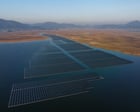
Image: The Guardian
In response to the Iran crisis, South Korea is accelerating its renewable energy transition, exemplified by the solar income village program in Guyang-ri. This initiative aims to establish 2,500 solar-powered villages by 2030, funded by a supplementary budget of 500 billion won ($335 million). However, challenges such as grid capacity and reliance on Chinese solar imports persist.
- 01Guyang-ri village's solar project generates 10 million won ($6,800) monthly, funding community welfare.
- 02South Korea plans to create 2,500 solar income villages by 2030, up from 150.
- 03The government allocated 500 billion won ($335 million) for energy transition amid rising fossil fuel prices.
- 04Grid capacity issues threaten the integration of renewable energy projects.
- 05The reliance on Chinese solar panel imports raises concerns about domestic production.
Advertisement
In-Article Ad
Guyang-ri, a farming village located about 90 minutes southeast of Seoul, has transformed through a solar energy initiative that generates 10 million won ($6,800) monthly, funding communal meals and infrastructure improvements. This project is part of South Korea's broader goal to establish 2,500 solar income villages by 2030, a significant increase from the current 150. The acceleration of this program is driven by President Lee Jae Myung's response to the Iran crisis, which has highlighted the country's dependence on imported fossil fuels, particularly oil from the Strait of Hormuz. To facilitate this transition, the government has allocated 500 billion won ($335 million) in supplementary funding for renewable energy projects, aiming to generate 20% of electricity from renewables by 2030 and phase out coal by 2040. However, challenges remain, including grid capacity limits in southern regions, reliance on Chinese solar imports, and the need for significant infrastructure upgrades. Critics argue that while the government shows political intent to accelerate the transition, it simultaneously supports fossil fuel industries through subsidies, creating a contradictory approach to energy policy.
Advertisement
In-Article Ad
The solar income village program not only improves local welfare through communal meals and infrastructure but also aims to reduce reliance on imported fossil fuels, potentially stabilizing energy costs for residents.
Advertisement
In-Article Ad
Reader Poll
Do you support the expansion of renewable energy projects in South Korea?
Connecting to poll...
Read the original article
Visit the source for the complete story.