





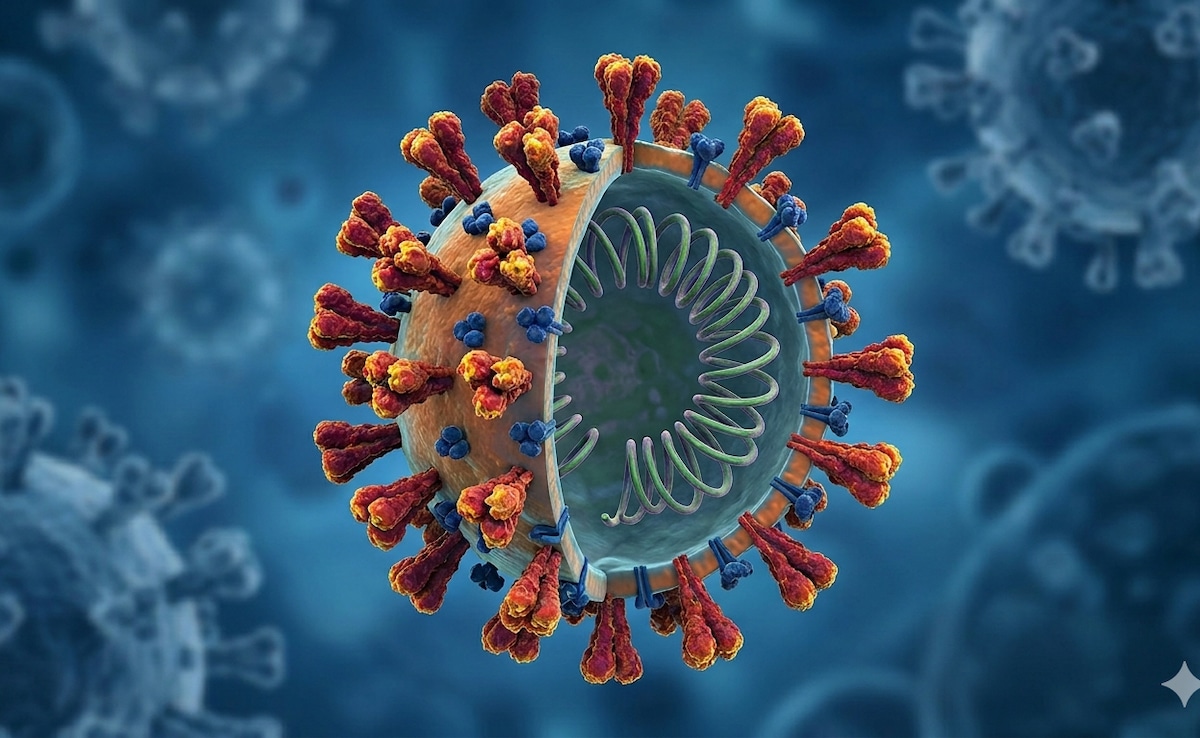

Understanding the Cicada Covid Variant BA.3.2: Implications for Vaccines and Public Health
Cicada Covid variant BA 3.2: Will existing vaccines work on the 70+ mutations of Omicron virus?
Image: indianexpress
The Cicada Covid variant BA.3.2, first detected in South Africa in November 2024, has around 70 mutations and is spreading globally. While it may evade existing vaccines partially, it poses a low public health risk according to the WHO, particularly affecting children without increased severity.
- 01Cicada variant BA.3.2 has 70-75 mutations and was first detected in South Africa.
- 02The variant has been reported in at least 23 countries and is prevalent in Northern Europe.
- 03WHO's assessment indicates BA.3.2 poses a low public health risk.
- 04Existing vaccines may be less effective against this variant but still likely protect against severe illness.
- 05The variant appears to primarily affect children without causing more severe disease.
Advertisement
In-Article Ad
The Cicada Covid variant BA.3.2, named for its resemblance to the cicada insect that re-emerges after long periods, was first identified in South Africa on November 22, 2024. This variant belongs to the Omicron family and has accumulated approximately 70 to 75 mutations, particularly in the spike protein, which is crucial for the virus's entry into human cells. By February 11, 2026, BA.3.2 had been reported in at least 23 countries, with significant prevalence in Northern Europe, where it accounted for 30% of cases in Germany, Denmark, and the Netherlands. The variant first appeared in the United States on June 27, 2025, through a traveler from the Netherlands, and has since been detected in at least 25 states. Despite its spread, the World Health Organization (WHO) has stated that BA.3.2 does not show a sustained growth advantage over other variants and is not associated with increased severity or hospitalizations. However, early studies suggest that existing vaccines may be less effective against BA.3.2, although they are still expected to provide protection against severe illness. The WHO currently assesses the public health risk from this variant as low, advising continued vigilance without panic.
Advertisement
In-Article Ad
The emergence of the Cicada variant BA.3.2 may lead to increased monitoring and potential adjustments in public health guidelines, especially concerning vaccinations and hygiene practices.
Advertisement
In-Article Ad
Reader Poll
How concerned are you about the new Cicada Covid variant BA.3.2?
Connecting to poll...
More about World Health Organization
Read the original article
Visit the source for the complete story.