



Urgent Reforms Needed for UPSC Civil Services Interview Stage
UPSC Civil Services Reforms: Why Interview or Personality Test stage needs urgent reform
 The Indian Express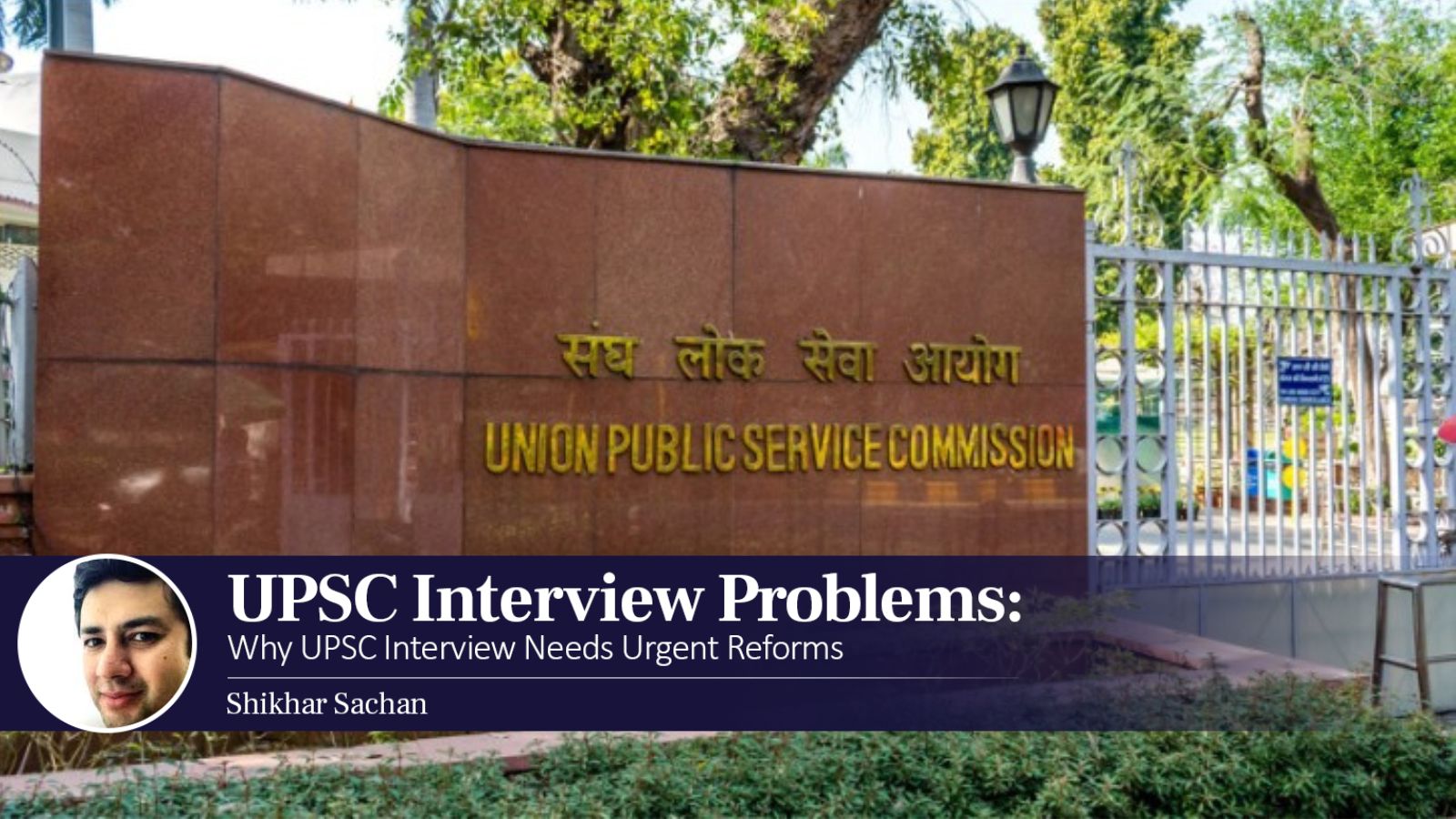
Image: The Indian Express
As the Union Public Service Commission (UPSC) marks its centenary, experts highlight the need for urgent reforms in the personality test stage of the Civil Services Examination. Despite improvements in earlier stages, the interview process remains subjective and opaque, raising concerns about fairness and consistency in candidate evaluations.
- 01The UPSC interview stage, worth 275 marks, is criticized for its subjectivity and lack of transparency.
- 02Reforms in earlier exam stages have improved fairness, but the interview process still lacks consistency.
- 03Variability in interview scoring raises concerns about the reliability of candidate assessments.
- 04Experts suggest adopting structured interview techniques from other sectors to enhance evaluation accuracy.
- 05Standardizing scoring rubrics and including multiple assessors could improve the interview process.
Advertisement
In-Article Ad
As the Union Public Service Commission (UPSC) enters its centenary year, calls for reform in the Civil Services Examination's personality test stage have intensified. Despite significant improvements in the written and preliminary stages, the interview process remains controversial due to its subjective nature. The interview, which carries 275 marks, is pivotal in determining candidates' final rankings, yet inconsistencies in scoring and evaluation methods persist. Experts argue that while UPSC has made strides in addressing structural issues, the interview stage still lacks transparency and fairness. Candidates often find themselves in the dark regarding how their performance translates into marks, leading to uncertainty and frustration. Variations in scoring across different panels further complicate the process, with some candidates receiving unexpectedly low scores despite performing well in mock interviews. To enhance the interview process, experts recommend implementing structured interviews, clear scoring rubrics, and involving multiple assessors. These changes could help reduce bias and improve the reliability of the evaluation. Addressing these challenges is crucial for maintaining public trust in the UPSC system and ensuring that the selection process is truly merit-based.
Advertisement
In-Article Ad
Reforming the UPSC interview process could lead to fairer assessments for candidates, ultimately influencing their career trajectories and public trust in the civil services selection system.
Advertisement
In-Article Ad
Reader Poll
Do you believe the UPSC interview process needs reform?
Connecting to poll...
More about Union Public Service Commission
Read the original article
Visit the source for the complete story.