


Exploring the Escanaba Trough: Insights into Earth's Core and Unique Ecosystems
Deep-Sea Escanaba Trough Holds Secrets of Earth's Fiery Core
 The Economic Times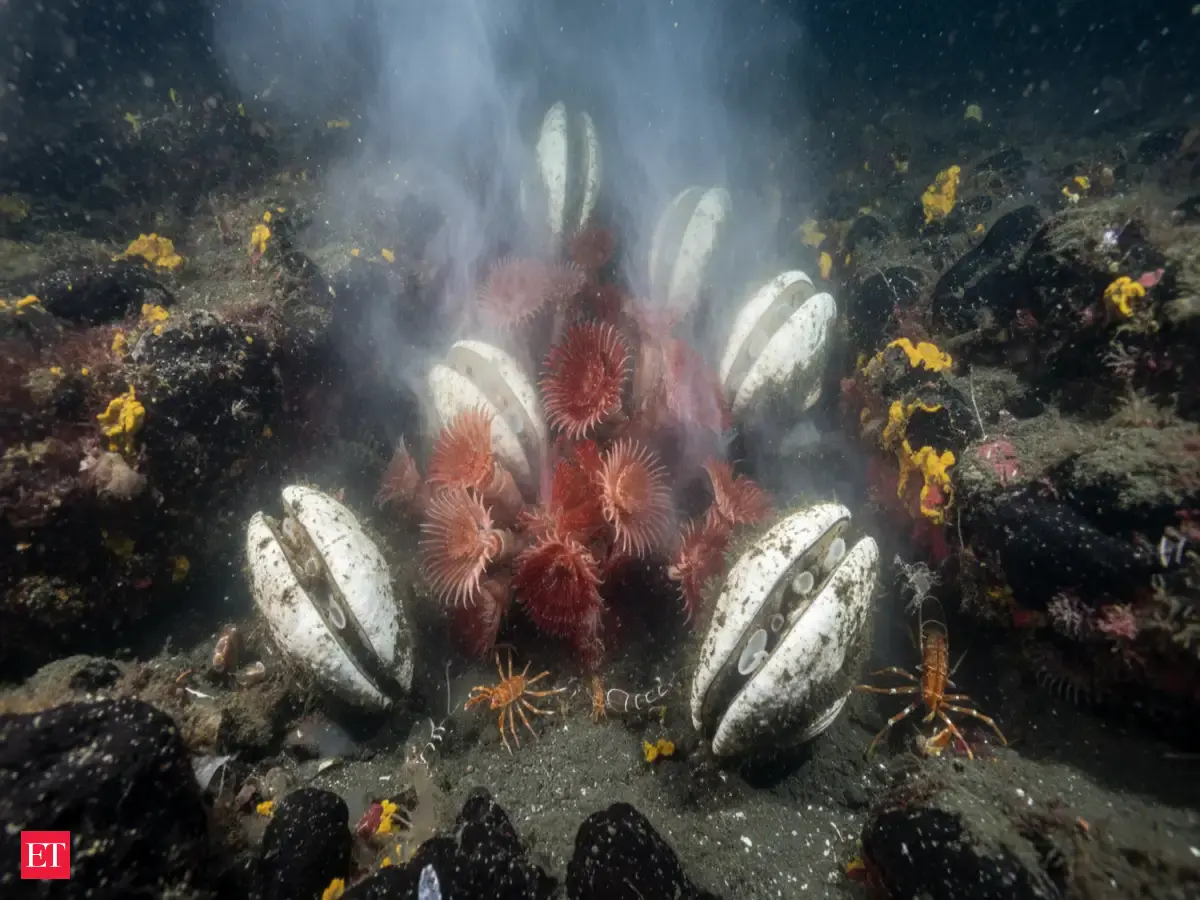
Image: The Economic Times
A recent expedition by the U.S. Geological Survey to the Escanaba Trough, located within U.S. waters, reveals an active geological landscape with hydrothermal vents supporting unique ecosystems. The research highlights the importance of understanding these systems rather than exploiting them, as they play a crucial role in Earth's geology and biology.
- 01The Escanaba Trough is an active geological site where the Earth's crust is pulling apart, allowing magma to rise and form new rock.
- 02Hydrothermal vents in the region support unique ecosystems that rely on chemical reactions for survival, rather than sunlight.
- 03The expedition utilized advanced mapping techniques to document the constantly changing landscape of the seafloor.
- 04Research indicates that the mineral resources found in the Escanaba Trough could be vital for new technologies.
- 05Current efforts prioritize monitoring and understanding these ecosystems rather than immediate extraction.
Advertisement
In-Article Ad
In 2022, a team from the U.S. Geological Survey (USGS) conducted an expedition to the Escanaba Trough, a geological feature located in U.S. waters. This area, characterized by its active hydrothermal vents, is part of a spreading center where the Earth's crust is gradually pulling apart. The expedition utilized remotely operated vehicles to map the seafloor and study its geology over three weeks. The findings revealed a dynamic environment where hydrothermal vents release heated water that carries metals like copper and zinc, forming chimney-like structures as the fluids cool and deposit minerals.
Life around these vents thrives in complete darkness, relying on chemical reactions rather than sunlight, which has transformed scientific understanding of life in extreme environments. The USGS's research emphasizes the need to monitor these ecosystems rather than exploit them, as they are fragile and sensitive to changes. The expedition not only sheds light on Earth's geological processes but also raises questions about the ethical implications of disturbing such unique habitats. Overall, the deep ocean is a vibrant and interconnected ecosystem, challenging the perception of it as a barren wasteland.
Advertisement
In-Article Ad
The research provides critical insights into the geological and biological processes at play in the Escanaba Trough, which could influence future policies on deep-sea exploration and conservation.
Advertisement
In-Article Ad
Read the original article
Visit the source for the complete story.