





Trump's Criticism of NATO Raises Questions on US Commitment and European Defense Spending
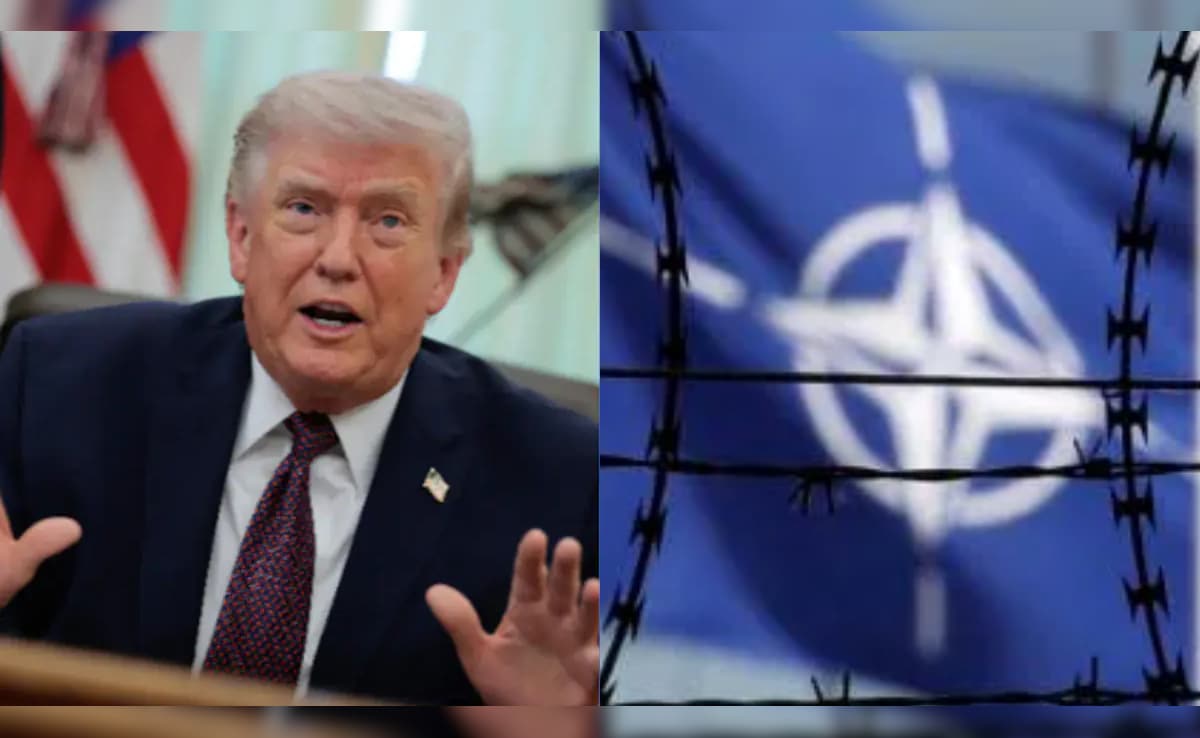
Is NATO Still Run By US As Trump Calls It 'Paper Tiger', Threatens To Exit?
 Ndtv
Ndtv
Image: Ndtv
Donald Trump has criticized NATO, calling it ineffective and suggesting a potential US withdrawal due to the alliance's lack of support during the Iran war. Despite Trump's claims, NATO's defense spending is increasingly being shouldered by European and Canadian allies, reflecting a shift in the alliance's burden-sharing dynamics.
- 01Trump questions NATO's effectiveness and hints at US withdrawal.
- 02NATO's defense spending is increasingly supported by European and Canadian nations.
- 03US defense budgets have struggled in real terms, while European spending is rising sharply.
- 04NATO leaders agreed to raise defense spending to 5% of GDP by 2035.
- 05A significant number of NATO members are nearing compliance with the 2% defense spending target.
Advertisement
In-Article Ad
Donald Trump has intensified his criticism of NATO, labeling the alliance a 'paper tiger' and suggesting that the US might withdraw due to perceived ineffectiveness, particularly after NATO's lack of support during the Iran war. He argues that NATO failed to back the US when needed, although NATO's rules do not mandate member support unless a member is directly attacked. Notably, NATO's defense spending has increasingly shifted towards European and Canadian nations, which have ramped up their military budgets in response to security concerns stemming from Russia's invasion of Ukraine. While US defense budgets have seen real-term declines, European and Canadian spending is projected to grow significantly, highlighting a change in the alliance's internal balance. By 2025, NATO's total defense spending is estimated to rise from about $1 trillion in 2014 to $1.4 trillion, with Europe and Canada contributing a larger share. In a significant policy shift, NATO leaders have agreed to aim for a defense spending target of 5% of GDP by 2035, replacing the previous 2% guideline, although compliance with the latter has been inconsistent. As of 2023, 10 out of 31 NATO members met the 2% target, with projections indicating that 31 out of 32 members will achieve this benchmark by 2025.
Advertisement
In-Article Ad
The shift in NATO's defense spending dynamics may lead to increased military capabilities among European nations, potentially altering the security landscape in Europe and affecting US foreign policy.
Advertisement
In-Article Ad
Reader Poll
Do you believe NATO can remain effective without US support?
Connecting to poll...
More about NATO
Read the original article
Visit the source for the complete story.