




Comparing Chia Seeds and Sabja Seeds for Effective Belly Fat Management
Chia Seeds vs Sabja Seeds: Which Is Better For Belly Fat Loss
 Ndtv
Ndtv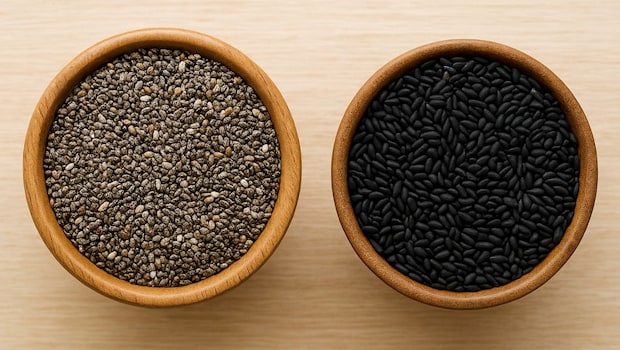
Image: Ndtv
Chia seeds and sabja seeds are both beneficial for weight management but function differently. Chia seeds support long-term fat loss through improved satiety and metabolism, while sabja seeds offer quick relief from bloating and help control appetite. Choosing between them depends on individual health goals.
- 01Chia seeds are rich in soluble fiber and omega-3 fatty acids, promoting long-term satiety.
- 02Sabja seeds, or basil seeds, swell quickly and help control appetite more immediately.
- 03Both seeds do not directly burn fat but support weight management through different mechanisms.
- 04Chia seeds may lead to modest reductions in waist circumference over time.
- 05Nutritionists recommend rotating both seeds for optimal health benefits.
Advertisement
In-Article Ad
Chia seeds and sabja seeds are often compared due to their similar appearances when soaked and their health benefits. Chia seeds are high in soluble fiber, omega-3 fatty acids, and plant-based protein. They form a gel-like texture when soaked, which slows digestion and enhances feelings of fullness. Research published in *The Journal of Nutrition* indicates that higher fiber intake is linked to better weight loss outcomes. Regular consumption of chia seeds can lead to modest reductions in waist circumference, making them effective for long-term fat loss when combined with a balanced diet and physical activity.
On the other hand, sabja seeds, also known as basil seeds, contain over 30% dietary fiber and swell quickly in water, creating a feeling of fullness. According to a study in the journal *Foods*, sabja seeds can help control appetite and relieve digestive discomfort, such as bloating and acidity. While they do not burn fat directly, they support better eating habits by improving digestion and reducing hunger.
In conclusion, chia seeds are better suited for those seeking long-term fat loss and metabolic support, while sabja seeds may be more beneficial for immediate appetite control and digestive comfort. Nutritionists suggest incorporating both seeds into a diet for complementary benefits.
Advertisement
In-Article Ad
Advertisement
In-Article Ad
Reader Poll
Which seed do you prefer for weight management?
Connecting to poll...
Read the original article
Visit the source for the complete story.