






The Enduring Role of the F-15E Strike Eagle in the Iran Conflict
Why US Is Using 50-Year-Old Jets In Iran War: The Deadly F-15E Strike Eagle ‘Bomb Trucks’ Explained
 News 18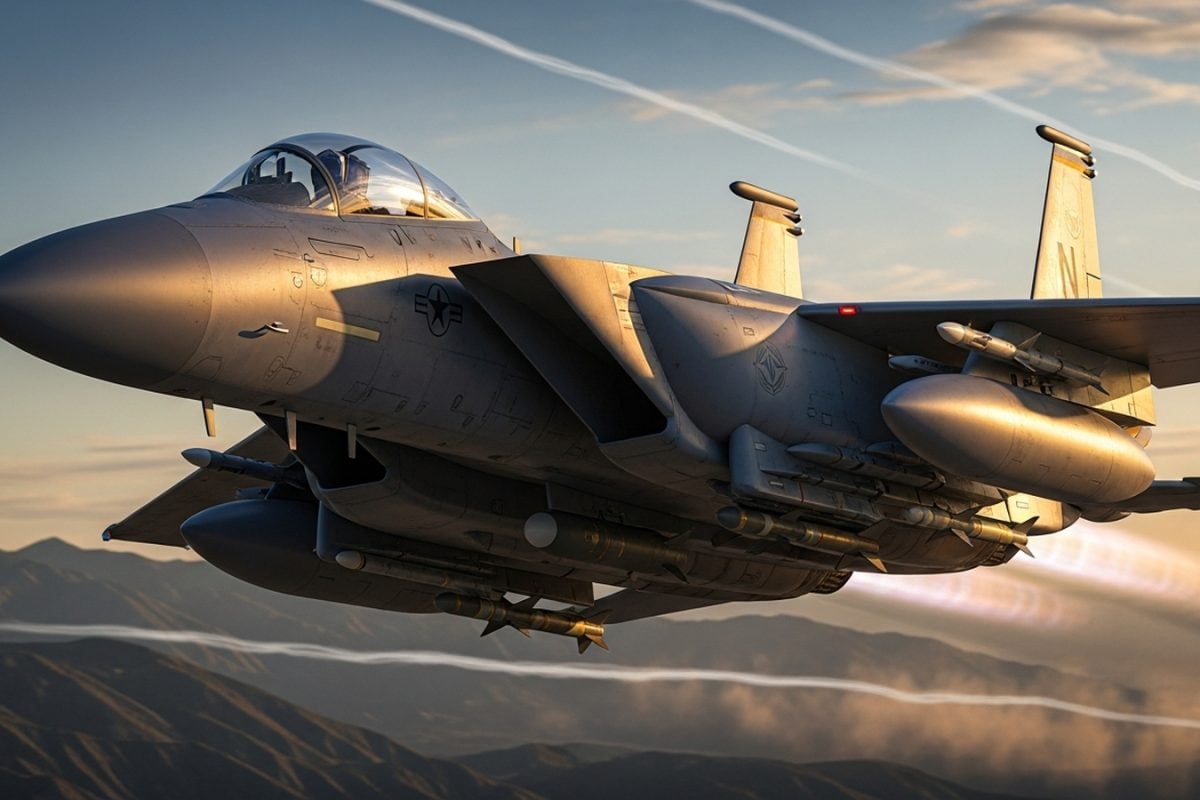
Image: News 18
The F-15E Strike Eagle, a dual-role fighter jet, continues to serve as a key asset for the United States in the ongoing conflict with Iran, despite its 50-year-old design. Its massive payload capacity, speed, and continuous upgrades make it a preferred choice for deep-strike missions, even as military experts debate the vulnerability of older aircraft against modern air defenses.
- 01The F-15E Strike Eagle has been crucial for US deep-strike missions in the Iran conflict since February 28.
- 02Despite being based on a design from the 1970s, the F-15E remains highly effective due to continuous upgrades.
- 03The aircraft's significant payload capacity and two-crew design enhance its combat effectiveness.
- 04An F-15E was shot down over Iran on April 3, 2026, marking a notable event in the conflict.
- 05The US Air Force plans to keep the F-15E in service until at least the 2030s, transitioning to the F-15EX Eagle II.
Advertisement
In-Article Ad
The F-15E Strike Eagle, introduced in 1988 and continuously modernized, remains a vital part of the United States' military strategy in the ongoing conflict with Iran, which began on February 28, 2026. This dual-role fighter jet is capable of executing both air-to-air and air-to-ground missions, making it a versatile asset in modern warfare. With the ability to carry over 10,400 kg (23,000 lbs) of ordnance, the F-15E can deliver a wide array of precision-guided munitions, outperforming even newer stealth fighters like the F-35 in terms of payload capacity. The aircraft's recent use in operations has highlighted its importance, particularly after an F-15E was shot down by Iranian air defenses on April 3, 2026, marking the first loss of a US fighter jet to enemy fire in over two decades. Both crew members successfully ejected, and a complex combat search and rescue operation ensued, showcasing the risks involved in deploying older aircraft against modern threats. Military experts are now debating the effectiveness of the F-15E against advanced surface-to-air missile systems, but the US Air Force plans to maintain a fleet of these jets until at least the 2030s, with future versions like the F-15EX Eagle II expected to carry next-generation hypersonic weapons.
Advertisement
In-Article Ad
The ongoing use of the F-15E in conflict may influence military strategies and defense spending, affecting both military personnel and defense contractors.
Advertisement
In-Article Ad
Reader Poll
Do you believe the US should continue using older aircraft like the F-15E in modern conflicts?
Connecting to poll...
More about US Air Force
Read the original article
Visit the source for the complete story.