



The Evolutionary Journey of Human Eyes from Ancient Marine Ancestors
Our modern vision evolved from an ancient one-eyed worm creature
 The Conversation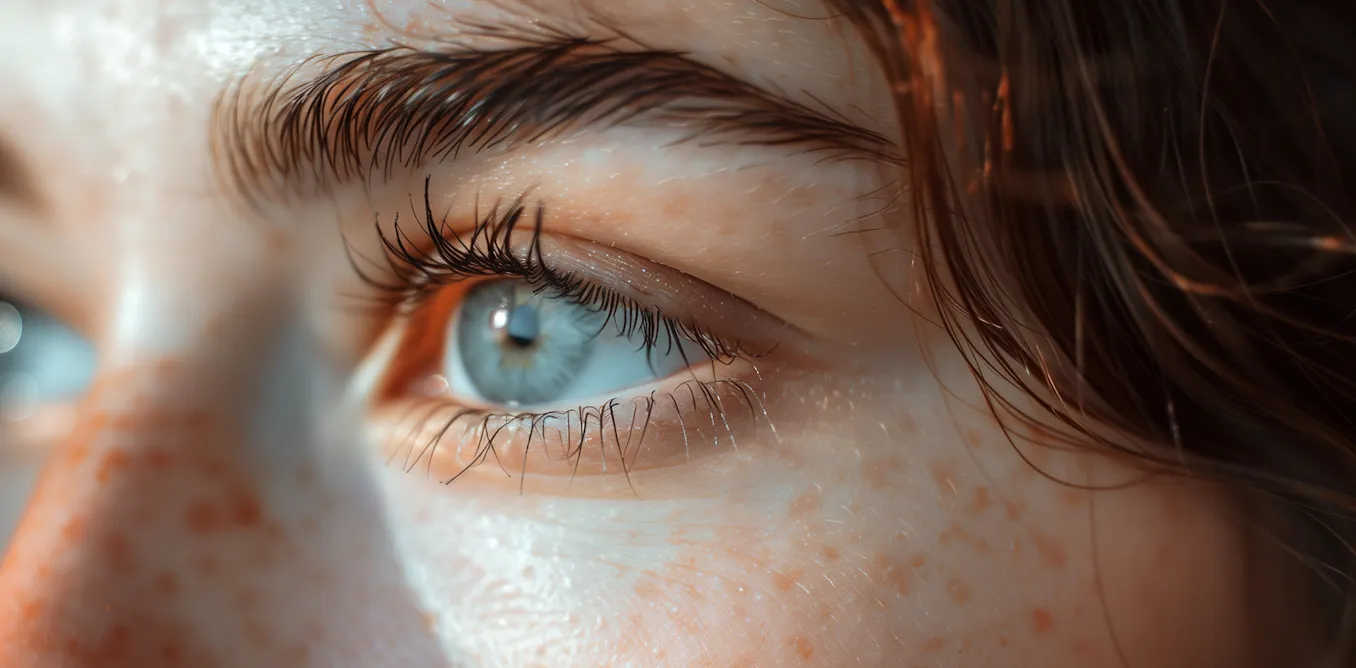
Image: The Conversation
Recent research reveals that human eyes evolved from a one-eyed worm-like ancestor that lived 600 million years ago. This study highlights the evolutionary transition from paired eyes to a midline eye, and back to paired eyes, linking the development of vision to complex behaviors in vertebrates.
- 01Human eyes evolved from a worm-like ancestor over 600 million years ago.
- 02The transition involved losing paired eyes and developing a midline eye.
- 03Reverting to a swimming lifestyle led to the re-emergence of paired eyes.
- 04The complexity of vertebrate retinas predates the evolution of modern eyes.
- 05The evolution of eyes is crucial for the cognitive development of vertebrates.
Advertisement
In-Article Ad
A recent study indicates that human eyes have a deep evolutionary history tracing back to a one-eyed, worm-like ancestor that existed 600 million years ago. Initially, this ancestor had paired light-sensing cells that were lost when it adopted a stationary lifestyle as a filter feeder. However, as it returned to swimming, evolution led to the development of paired eyes from a midline eye, enhancing its ability to navigate and avoid predators. This research surveyed 36 major animal groups, revealing that paired eyes are crucial for complex behaviors and cognitive functions in vertebrates. Interestingly, the retina in vertebrates is highly complex, containing over 100 types of neurons, suggesting that the intricacies of vision may have evolved earlier than previously thought. This evolution of eyes is not just about sight; it is fundamentally linked to the cognitive capabilities of vertebrates, including humans.
Advertisement
In-Article Ad
Advertisement
In-Article Ad
Reader Poll
How important do you think the study of evolution is for understanding human biology?
Connecting to poll...
Read the original article
Visit the source for the complete story.