





Discovery of Ancient Fossils in Southwest China Challenges Evolutionary Timeline
Scientists found a “lost world” of animals that shouldn’t exist yet
 Science Daily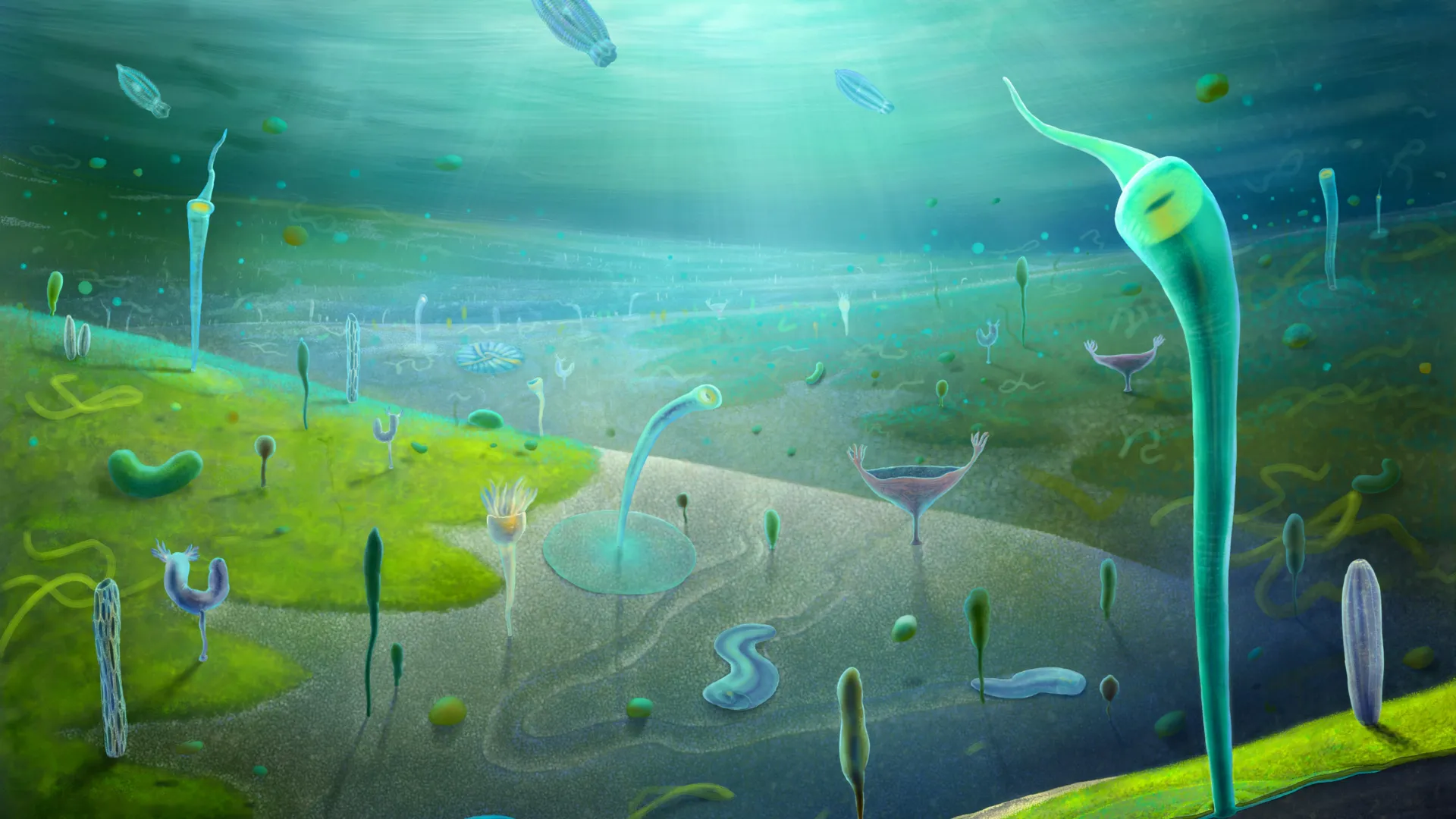
Image: Science Daily
A groundbreaking fossil discovery in Yunnan Province, China, reveals a diverse ecosystem from the late Ediacaran period, suggesting that complex animal life existed millions of years earlier than previously thought. This finding challenges established timelines of evolution and provides new insights into the origins of modern animal groups.
- 01Fossils from the Jiangchuan Biota date back over 540 million years, indicating complex life existed earlier than the Cambrian explosion.
- 02The discovery includes early relatives of vertebrates, starfish, and worm-like creatures, suggesting a rich Ediacaran ecosystem.
- 03The findings close a significant gap in understanding the evolution of complex animals.
- 04Fossils were preserved as carbonaceous films, allowing for detailed examination of anatomical features.
- 05The research was led by teams from the University of Oxford and Yunnan University, published in the journal Science.
Advertisement
In-Article Ad
A recent discovery of fossils in the Jiangchuan Biota in Yunnan Province, China, is reshaping our understanding of early animal life. Dating back over 540 million years, these fossils reveal a surprisingly advanced ecosystem from the late Ediacaran period, predating the Cambrian explosion by at least 4 million years. Researchers found early relatives of key animal groups, including vertebrates, starfish, and worm-like creatures, indicating that the roots of modern life were forming much earlier than previously believed. Lead author Dr. Gaorong Li from the University of Oxford stated that this discovery fills a crucial gap in the timeline of animal diversification. The fossils were preserved as carbonaceous films, providing exceptional detail of anatomical structures. The research team, which included experts from Yunnan University, spent nearly a decade searching for these fossils, ultimately uncovering evidence of diverse bilaterian animals at the end of the Ediacaran period, a significant milestone in evolutionary biology.
Advertisement
In-Article Ad
This discovery enhances our understanding of the evolutionary history of life on Earth, which could influence future research and education in paleontology and evolutionary biology.
Advertisement
In-Article Ad
Reader Poll
How important do you think fossil discoveries are for understanding evolution?
Connecting to poll...
More about University of Oxford
Read the original article
Visit the source for the complete story.