







Global Perspectives on School Phone Bans: Insights from Hungary and Beyond
How the world deals with phones in schools
 The Times Of India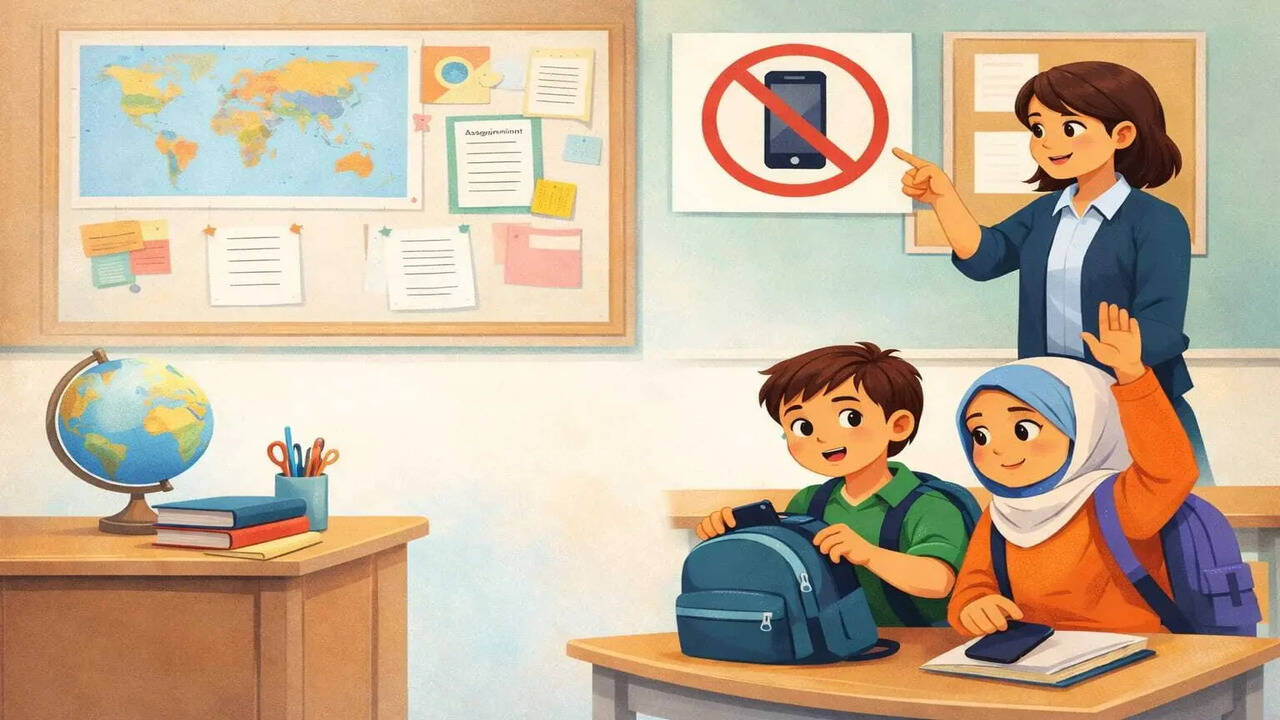
Image: The Times Of India
A study by Hungarian researchers highlights the impact of mobile phone bans in schools, revealing reduced usage and some behavioral improvements among students. However, the findings also indicate that while such restrictions can enhance social interactions, they do not necessarily lead to better academic performance or reduced overall screen time. Other studies suggest modest mental health benefits from similar bans.
- 01Hungary bans mobile phones in schools unless permitted by teachers or principals.
- 02A study showed a drop in student phone usage from 37% to 4% after restrictions.
- 03Behavioral improvements included increased face-to-face interactions and outdoor activities.
- 04Bans alone do not guarantee better academic outcomes or reduced screen time.
- 05Balanced policies and responsible technology training are essential for effective implementation.
Advertisement
In-Article Ad
A recent study conducted by Hungarian researchers Eniko Pozsonyi, Tunde Lengyelne Molnar, and Reka Racsko examined the effects of mobile phone restrictions in schools, revealing significant changes in student behavior. In Hungary, mobile phones, tablets, laptops, and smartwatches are banned unless explicitly permitted by teachers or principals. This policy aims to minimize distractions and combat cyberbullying. The study surveyed 1,198 secondary school teachers after one year of the ban, finding that frequent phone use among students dropped from 37% to just 4%. Teachers reported more face-to-face interactions and outdoor activities, although improvements in academic preparation were modest. While 64% of teachers observed no significant changes in academic performance, some noted positive effects like improved attention and participation. However, students still faced challenges, such as hiding devices or compensating for lost phone time at home. Additionally, UNESCO's 2023 Global Education Monitoring Report emphasized that even phone notifications can disrupt concentration. A second study from South Australia indicated that phone bans correlated with a 2.4% decrease in psychological distress and a 5.2% reduction in negative emotions. The researchers concluded that while phone bans can enhance social well-being, they must be part of a broader strategy that includes responsible technology use and teacher support.
Advertisement
In-Article Ad
The findings suggest that banning phones in schools can enhance social interactions among students and provide modest mental health benefits, though they do not necessarily lead to improved academic performance.
Advertisement
In-Article Ad
Reader Poll
Should schools implement stricter phone bans to improve student focus?
Connecting to poll...
More about UNESCO
Read the original article
Visit the source for the complete story.