

NCERT Launches New Class 9 Science Textbook Integrating Traditional Knowledge
NCERT rolls out new Class 9 science book

Image: hindustantimes
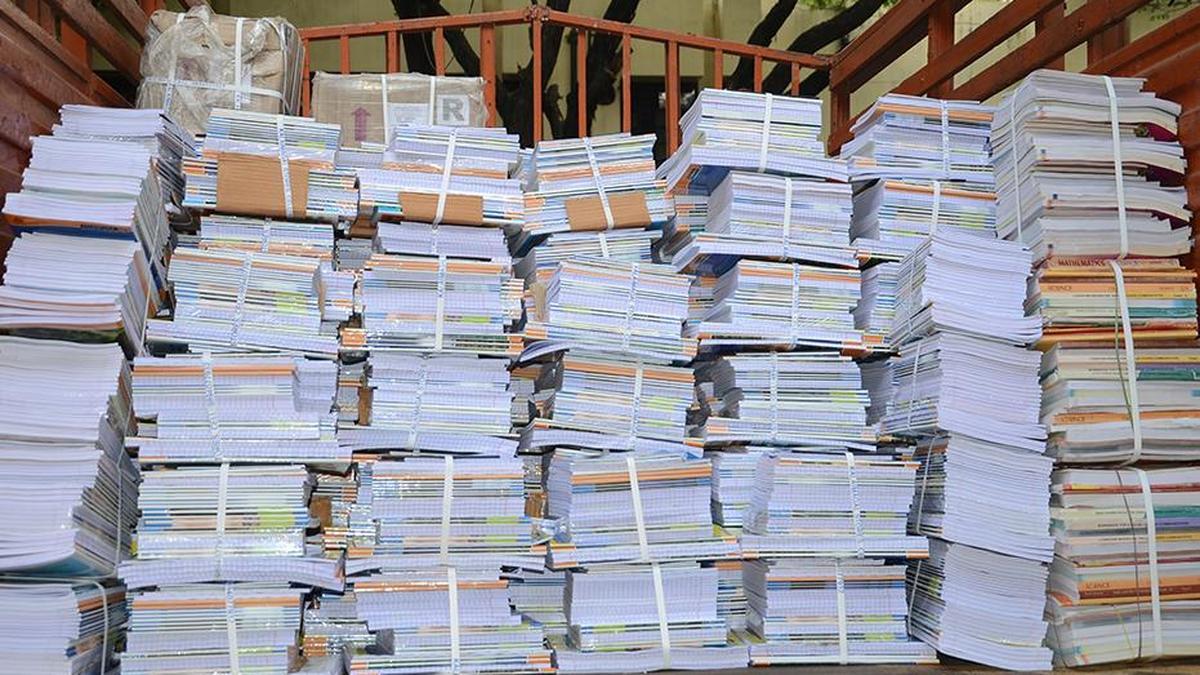
The National Council of Educational Research and Training (NCERT) has introduced a new Class 9 science textbook titled 'Exploration' for the 2026-27 academic session. This textbook integrates contemporary science with India's traditional knowledge systems and highlights contributions from notable Indian scientists and institutions.
- 01The new textbook, titled 'Exploration', will be used from the 2026-27 academic session.
- 02It integrates contemporary science with India's traditional knowledge and highlights Indian scientists.
- 03The textbook replaces an earlier version published in 2006 and has been streamlined from 15 to 13 chapters.
- 04It emphasizes inquiry-based learning and real-life applications, moving away from rote memorization.
- 05Key topics include cells, tissues, and energy, while some chapters have been moved to Class 10.
Advertisement
In-Article Ad
The National Council of Educational Research and Training (NCERT) has released a new Class 9 science textbook, 'Exploration', set to be implemented in the 2026-27 academic session. This textbook integrates contemporary scientific concepts with India's traditional knowledge systems, emphasizing the contributions of Indian scientists and institutions such as the Bhabha Atomic Research Centre (BARC) in Mumbai and the Indian Institute of Tropical Meteorology (IITM) in Pune. The new book, consisting of 13 chapters, replaces the previous edition, which had 15 chapters and was reduced to 12 after rationalization in 2022. Aligned with the National Education Policy (NEP) 2020 and the National Curriculum Framework for School Education (NCF-SE) 2023, 'Exploration' promotes inquiry, experimentation, and data analysis, marking a significant shift from rote learning. Key topics like cells, tissues, and energy are retained but revised, while chapters on gravitation and agricultural concepts will be introduced in Class 10. The textbook also includes a chapter on reproduction and references traditional knowledge, such as the concept of speed from the Aryabhatiya and methods from the perfume industry in Kannauj. NCERT director Dinesh Prasad Saklani emphasizes that the new textbook fosters a holistic understanding of science and its interrelationship with technology and society.
Advertisement
In-Article Ad
The new textbook aims to enhance students' understanding of science through experiential learning, which could improve their overall educational outcomes.
Advertisement
In-Article Ad
Reader Poll
Do you support integrating traditional knowledge into school curriculums?
Connecting to poll...
More about National Council of Educational Research and Training
Read the original article
Visit the source for the complete story.