






Google Predicts Quantum Computing Could Threaten Bitcoin Security by 2032
Google says quantum computing will crack bitcoin cryptography sooner than expected, estimating a 10% chance of 'Q-Day' by 2032
 Pc Gamer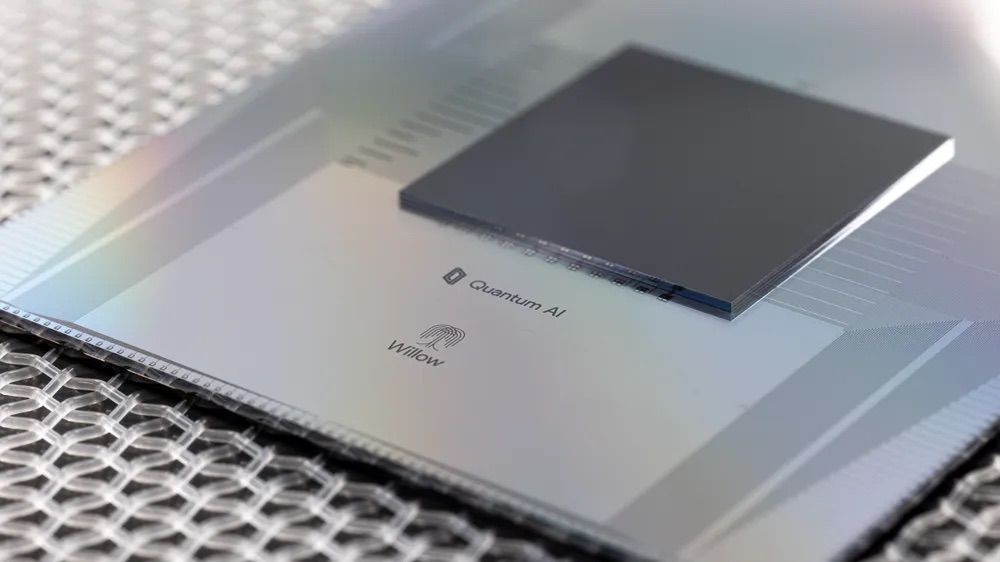
Image: Pc Gamer
Google's Quantum AI researchers have significantly lowered the estimated qubit requirement to crack bitcoin's cryptography, suggesting a 10% chance of 'Q-Day'—when a quantum computer can break public-key encryption—by 2032. This raises urgent concerns for the security of cryptocurrencies, particularly those using elliptic curve cryptography.
- 01Google estimates that a quantum computer with fewer than 500,000 qubits could crack bitcoin's cryptography.
- 02The timeframe for 'Q-Day' could arrive by 2032, with at least a 10% chance.
- 03Current quantum devices like Google's Willow chip have only 105 qubits, highlighting the gap to achieving Q-Day.
- 04Public-key cryptography will be most affected, while symmetric encryption will face reduced security rather than complete failure.
- 05Cryptocurrencies are particularly vulnerable due to their reliance on elliptic curve keys, which are smaller and easier to crack.
Advertisement
In-Article Ad
Google's recent whitepaper reveals a startling prediction regarding the future of cryptocurrency security. Researchers from Google Quantum AI assert that the requirement for a quantum computer to crack the cryptography protecting bitcoin and other cryptocurrencies could be as low as 500,000 physical qubits, a significant reduction from previous estimates. This advancement raises the likelihood of 'Q-Day', the moment when quantum computing can effectively break public-key encryption, to at least a 10% chance by 2032, according to co-author Justin Drake. Currently, Google's most powerful quantum device, the Willow chip, has only 105 qubits, while IBM's Condor processor has surpassed 1,000 qubits. However, the quality of qubits is critical, with Google's system achieving high fidelities that make it more effective than larger, less reliable systems. The implications of Q-Day are profound; while it won't spell the end for all digital security, public-key cryptography—relied upon by cryptocurrencies—will be particularly vulnerable. Google's whitepaper emphasizes that blockchains, which use elliptic curve keys, are at greater risk as these keys are smaller and can be cracked by smaller quantum machines. This scenario highlights the urgent need for the cryptocurrency industry to prepare for potential vulnerabilities as quantum computing technology continues to advance.
Advertisement
In-Article Ad
The potential arrival of Q-Day could lead to significant vulnerabilities in cryptocurrency security, affecting investors and users of digital currencies.
Advertisement
In-Article Ad
More about Google Quantum AI
Read the original article
Visit the source for the complete story.