



China's Deep-Sea Cable Cutter Test Raises Concerns Over Global Internet Security
New domain in modern warfare? China’s deep-sea cable cutter test at 3,500 meters—where most internet cables lie—could give America an an internet blockade at China will
 The Economic Times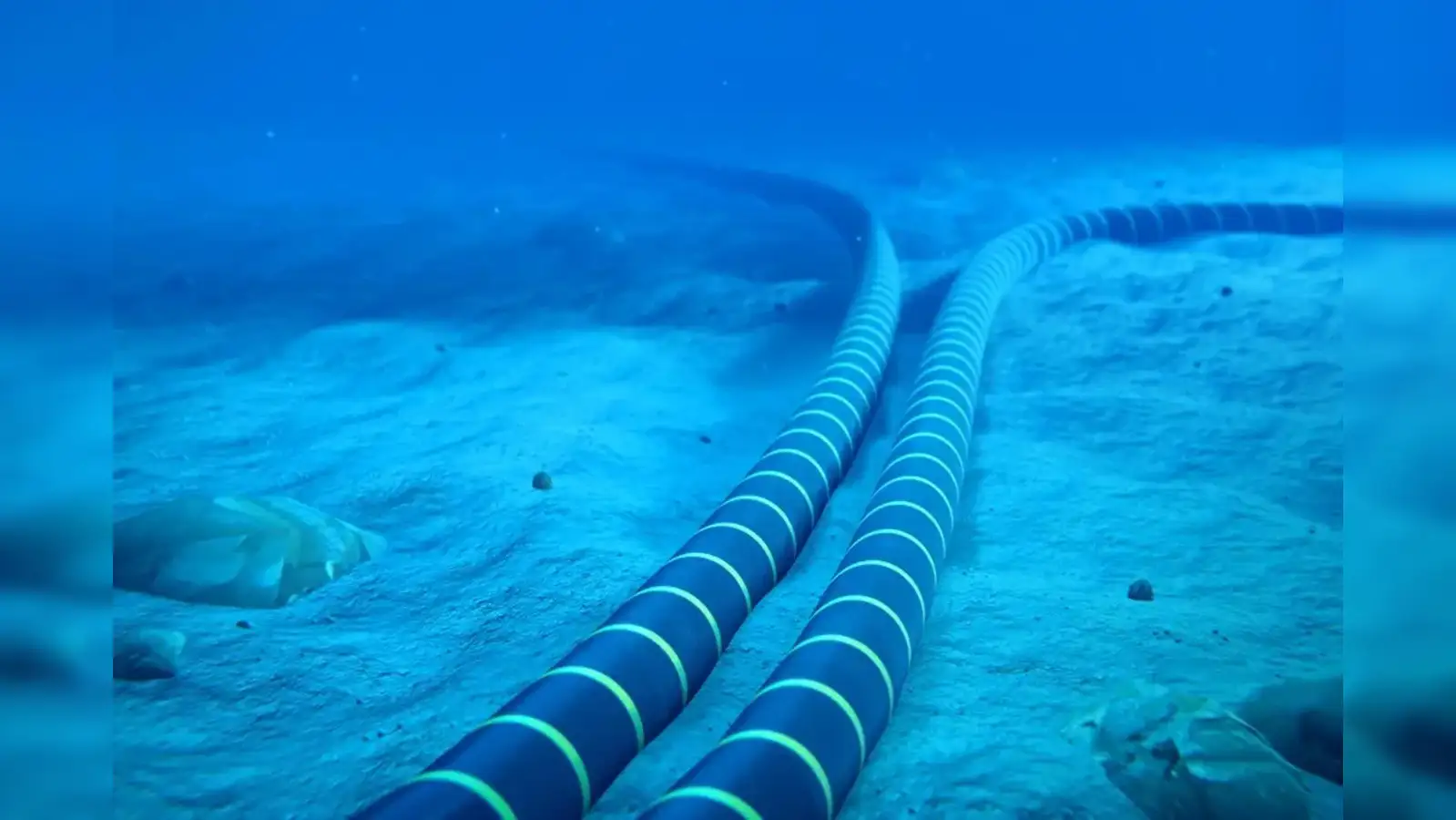
Image: The Economic Times
China has successfully tested a deep-sea cable cutter capable of operating at depths of 3,500 meters, raising concerns about the security of undersea internet cables that carry over 95% of global data traffic. This technology could have significant implications for both civilian and military applications, as it challenges previous assumptions about the security of deep-sea infrastructure.
- 01China's deep-sea cable cutter can operate at depths of 3,500 meters, significantly enhancing subsea engineering capabilities.
- 02The technology poses potential threats to global internet security, as it can sever undersea cables that carry 95% of global data.
- 03The electro-hydrostatic actuator used in the cutter improves operational efficiency and reduces the complexity of deep-sea tasks.
- 04The Haiyang Dizhi 2 research vessel plays a crucial role in conducting these tests and expanding China's deep-sea capabilities.
- 05This advancement blurs the lines between civilian and military applications, raising geopolitical tensions.
Advertisement
In-Article Ad
China's recent test of a deep-sea cable cutter at 3,500 meters has garnered international attention due to its potential implications for global internet security. Conducted from the research vessel Haiyang Dizhi 2, this test demonstrated the ability to cut undersea infrastructure at significant depths, where over 95% of global internet traffic flows. The technology, based on an advanced electro-hydrostatic actuator, allows for precise cutting and manipulation of cables, which could have both civilian and military applications. Experts warn that this capability introduces vulnerabilities to critical communication lines, which were previously considered secure due to their inaccessibility. The test not only marks a leap in subsea engineering but also raises questions about the geopolitical landscape as nations reassess the security of their underwater infrastructure. The Haiyang Dizhi 2, equipped for deep-sea exploration, hosted over 100 scientific personnel during the test, highlighting its role in advancing China's strategic capabilities in marine technology.
Advertisement
In-Article Ad
The advancement in deep-sea cable cutting technology could lead to increased vulnerabilities in global communications, prompting governments and telecom operators to enhance security measures.
Advertisement
In-Article Ad
Reader Poll
Do you think the development of deep-sea cable cutting technology poses a threat to global internet security?
Connecting to poll...
Read the original article
Visit the source for the complete story.