


New Findings Resolve Proton Size Discrepancy in Physics
Physicists think they've resolved the proton size puzzle
 arstechnica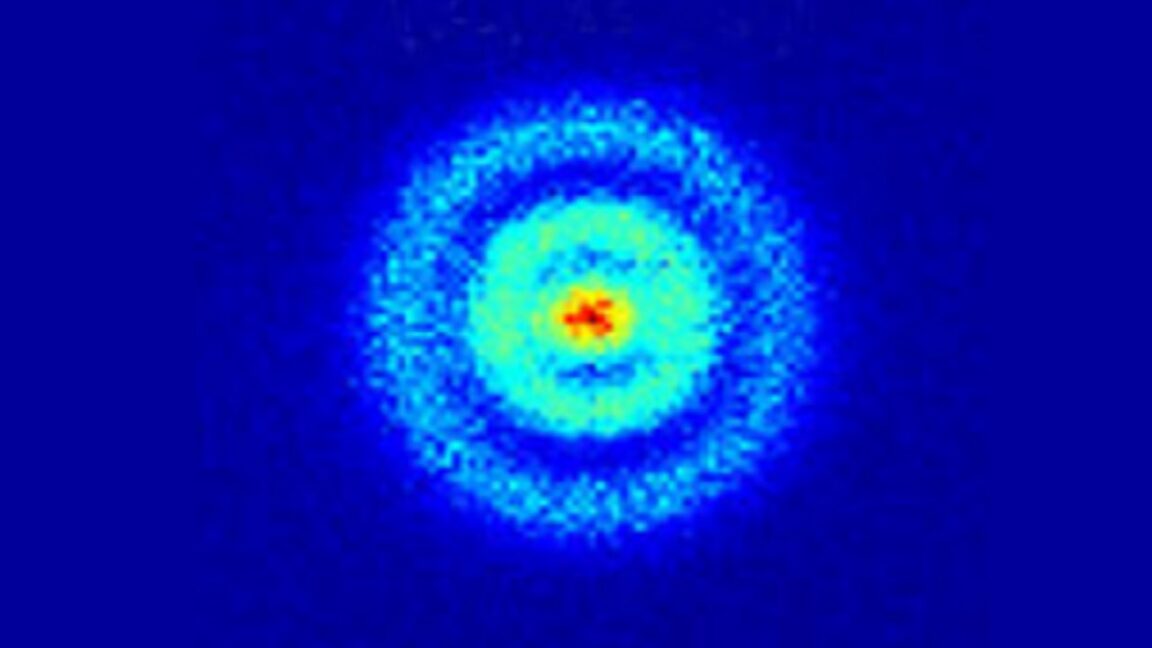
Image: arstechnica
Recent experimental measurements have largely settled the long-standing debate over the size of the proton's charge radius, suggesting it is smaller than previously thought. This conclusion, supported by studies published in Nature and Physical Review Letters, challenges the notion of new physics and aligns with existing theoretical models.
- 01The proton's charge radius has been a topic of debate for 15 years.
- 02Recent studies indicate a smaller proton radius, contradicting earlier measurements.
- 03The findings suggest no new physics beyond current theoretical models.
- 04The proton is composed of three quarks, creating a fuzzy structure.
- 05Experimental methods include electron scattering and spectroscopy.
Advertisement
In-Article Ad
For the past 15 years, physicists have grappled with conflicting measurements regarding the charge radius of a proton in a hydrogen atom. Recent studies published in the journals Nature and Physical Review Letters have provided clarity, indicating that the proton's radius is indeed smaller than previously measured, thus dismissing the possibility of new physics. Lothar Maisenbacher from the University of California, Berkeley, remarked that this could be the definitive resolution to the proton radius puzzle. The proton, made up of three quarks bound by the strong nuclear force, exhibits a fuzzy nature, complicating the definition of its radius. This radius is determined by the charge density, akin to measuring the density of water in a cloud. The interaction between electrons and protons, analyzed through methods like electron scattering and spectroscopy, allows scientists to measure this radius, revealing the electron's potential to exist within the proton's fuzzy boundaries.
Advertisement
In-Article Ad
Advertisement
In-Article Ad
Reader Poll
Do you believe there are undiscovered aspects of particle physics?
Connecting to poll...
Read the original article
Visit the source for the complete story.