



Pakistan's Strategic Abstention in UNSC Vote on Strait of Hormuz
Fence-Sitting In A Firestorm: Why Pakistan Abstained From Crucial UNSC Vote On Strait Of Hormuz | Exclusive
 News 18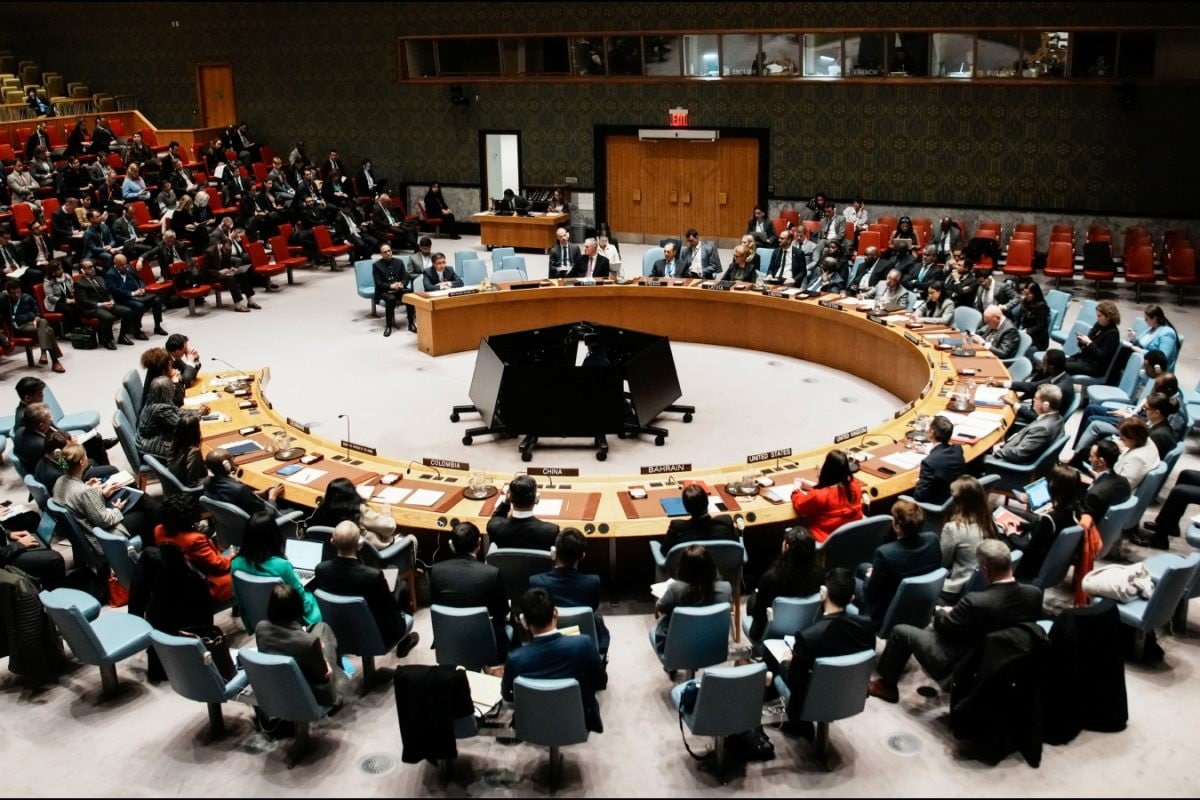
Image: News 18
In a recent United Nations Security Council session, Pakistan abstained from a resolution aimed at securing the Strait of Hormuz, reflecting its complex economic and security concerns. This decision allows Pakistan to navigate its relationships with both Gulf Arab states and Iran amid rising tensions and high global oil prices.
- 01Pakistan's abstention in the UNSC vote highlights its need for a balanced approach amid regional tensions.
- 02The Gulf region is crucial for Pakistan's economy, with millions of workers contributing to foreign exchange reserves through remittances.
- 03Global oil prices are currently high, making energy security a top priority for Pakistan.
- 04The failure of the UNSC resolution indicates a significant breakdown in international cooperation on global chokepoints.
- 05Pakistan aims to avoid alienating either the Gulf Arab states or Iran to protect its national interests.
Advertisement
In-Article Ad
During a recent session of the United Nations Security Council (UNSC), a resolution proposed by the United Arab Emirates (UAE) and Bahrain to secure the Strait of Hormuz failed to pass. Pakistan's decision to abstain from the vote, alongside Colombia, underscores its delicate balancing act between its ideological neighbors and economic necessities. By abstaining, Pakistan aims to maintain neutrality, avoiding the risk of alienating Iran or incurring the displeasure of the United States and Gulf Arab states. The Gulf region is vital for Pakistan's economy, hosting millions of Pakistani workers whose remittances significantly bolster the nation's foreign exchange reserves. With global oil prices soaring to approximately $111 per barrel, Pakistan is keen to protect its energy security while navigating the complex geopolitical landscape. The vetoes from China and Russia, combined with abstentions, reveal a breakdown in the UNSC's ability to manage critical global chokepoints, leaving the Strait of Hormuz in a precarious state. This deadlock raises concerns about global energy stability, as the lack of a UN-sanctioned framework increases the risk of unilateral actions by the US and its allies.
Advertisement
In-Article Ad
Pakistan's abstention reflects its need to protect economic interests tied to remittances and energy security, crucial for the nation's stability.
Advertisement
In-Article Ad
Reader Poll
Do you think Pakistan made the right decision by abstaining from the UNSC vote?
Connecting to poll...
More about United Nations Security Council
Russia and China Block UN Resolution to Reopen Strait of Hormuz Amid Rising Tensions
The Indian Express • Apr 7, 2026
Bahrain Proposes Revised Security Council Draft on Strait of Hormuz, Avoiding Force Language
economictimes_indiatimes • Apr 7, 2026

Nirmala Sitharaman Warns of Global Economic Risks from US-Iran Conflict
hindustantimes • Apr 7, 2026
Read the original article
Visit the source for the complete story.