



The Hidden Risks of Kitchen Sponges: A Major Source of Bacterial Contamination
The Overlooked Kitchen Surface Where Bacteria Spreads Fastest
 The Economic Times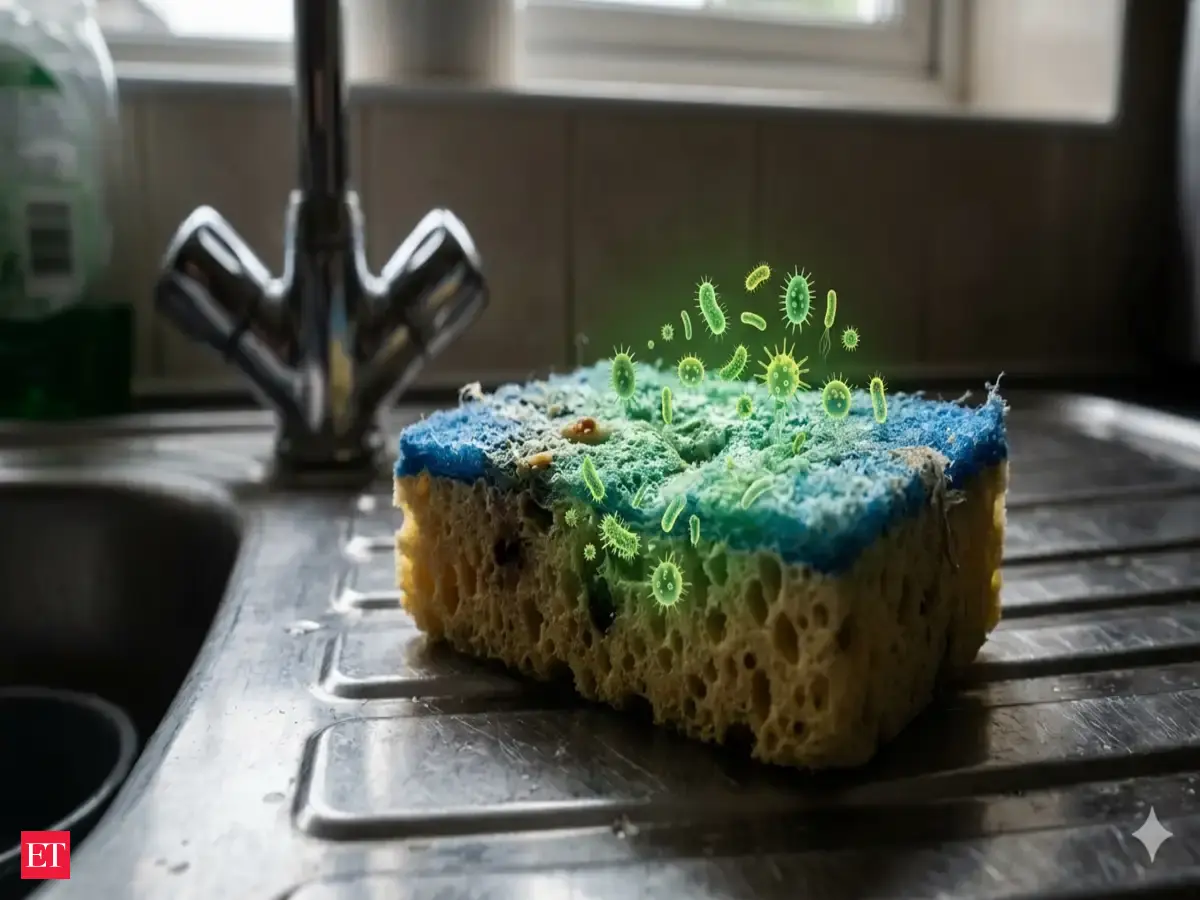
Image: The Economic Times
Kitchen sponges, often overlooked in cleanliness, harbor an alarming amount of bacteria, making them a significant source of foodborne illness. Studies reveal that sponges can contain up to 5.4×10^10 bacteria per cubic centimeter, far exceeding contamination levels found on countertops and cutting boards. Proper maintenance and regular replacement are essential to mitigate these risks.
- 01Kitchen sponges can harbor up to 5.4×10^10 bacteria per cubic centimeter.
- 02Sponges are more contaminated than countertops and cutting boards.
- 03Common cleaning practices can spread bacteria from sponges to other surfaces.
- 04Regular replacement and proper cleaning methods can reduce bacterial counts.
- 05Food safety guidelines often overlook the risks posed by cleaning tools.
Advertisement
In-Article Ad
Kitchen sponges are a surprising source of bacterial contamination in homes, often containing up to 5.4×10^10 bacteria per cubic centimeter, according to a study from the University of Applied Sciences and Arts Northwestern Switzerland. Research shows that sponges, due to their porous and moist nature, are perfect environments for bacteria to thrive, often harboring pathogens like E. coli and Salmonella. Studies indicate that sponges are significantly more contaminated than kitchen countertops and cutting boards. Despite their role in cleaning, many people underestimate the contamination risk associated with sponges, often believing them to be inherently safe. To combat this, experts recommend microwaving sponges or running them through the dishwasher to reduce bacterial counts, alongside regular replacement every week. By addressing the cleanliness of sponges, home cooks can minimize the risk of foodborne illness and improve kitchen hygiene.
Advertisement
In-Article Ad
Understanding the contamination risks associated with kitchen sponges can lead to better hygiene practices, reducing the risk of foodborne illnesses in households.
Advertisement
In-Article Ad
Reader Poll
How often do you replace your kitchen sponge?
Connecting to poll...
Read the original article
Visit the source for the complete story.