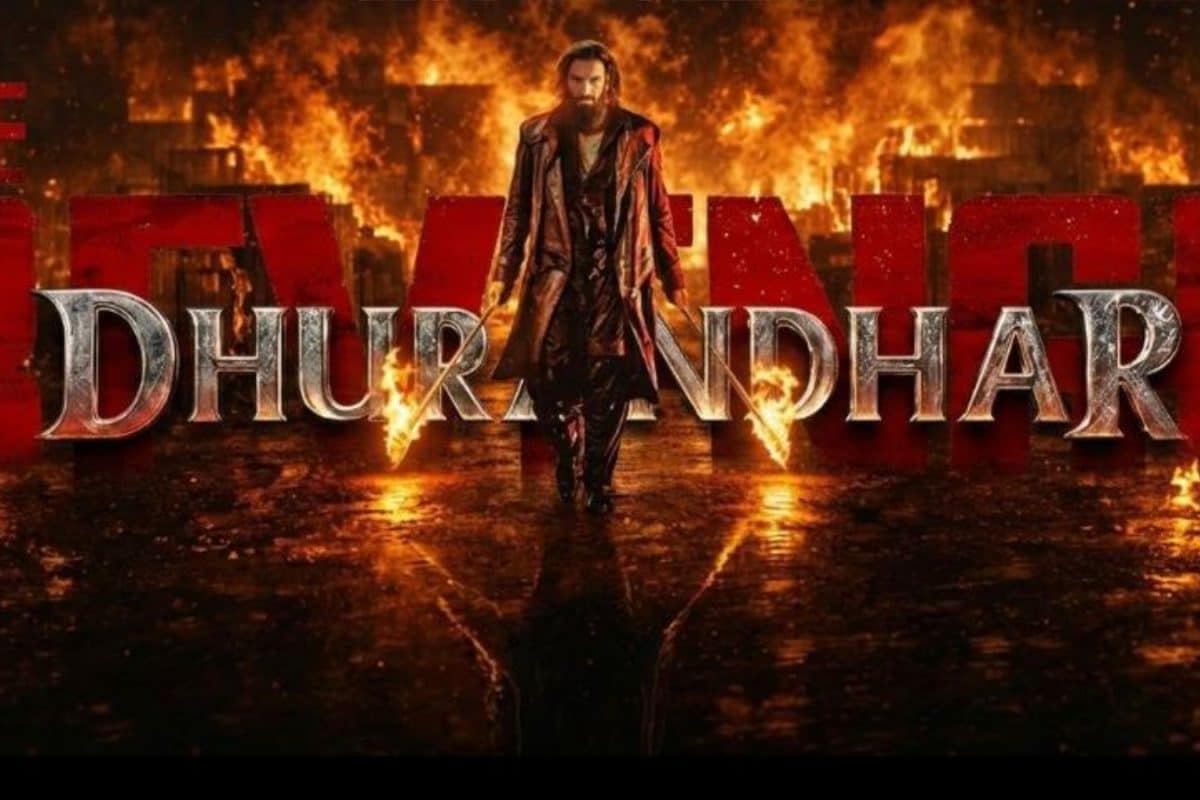
Opinion | 1971 Revisited: ‘Dhurandhar 2’ And The Genocide The World Chose To Ignore Brigadier Jahangir in ‘Dhurandhar 2’, in his own despicable way, reveals what many did not know about the awful prelude to the 1971 war perpetrated by Pakistan A premier hospital in Bangladesh’s capital, Dhaka, one summer afternoon in 2008. A woman on a personal quest of discovery. Me. I was born in Holy Family Hospital in October 1965, three weeks after the end of the India-Pakistan war, so it was recorded there somewhere. As the daughter of the then Indian deputy high commissioner in East Pakistan, my birth was also registered and certified at the high commission, but I wanted to see the hospital’s register... But first, a flash forward. One of the most chilling scenes in Dhurandhar 2: The Revenge is an interaction between Major Iqbal, the Pakistani ISI mastermind behind many attacks on India, and his even more reprehensible father, Brigadier Jahangir. The old man, partly paralysed and totally bitter, castigates his son for being ineffectual in furthering Pakistan’s agenda of destroying India and cites his own record of rape and brutality in East Pakistan as the way to go. Recommended Stories - Married Man Can't Be Prosecuted For Being In Consensual Live-In Relationship: Allahabad HC - Woman techie killed as man, son ram car into protesters in Indore; accused held - Son masterminds Rs 10 lakh robbery in Delhi, among three held - Man Hangs Two Daughters, 10 And 11, Upside Down Over Theft Suspicion; One Dead Berating Iqbal for “only" producing a daughter, Jahangir proudly asserts that he raped 1,000 women in East Pakistan, both Muslim and Hindu, presumably, and thus must have thousands of sons in today’s Bangladesh. He was, of course, alluding to one of the most under-reported rapes and genocides in modern history, when Pakistan’s armed forces, bolstered by migrant and local collaborators, launched a brutal campaign to quell and decimate the eastern province. Even by conservative estimates, the Pakistani military and non-Bengali-speaking militias systematically killed 3 million Bengali-speaking East Pakistanis and raped 4 lakh Bengali women. Compare that to the protest-triggering “genocides" of today. Back then, there was no social media-fuelled outrage and marches, no gratuitous homilies at Oscar ceremonies. The jihadis who backed the “student revolution" that ousted Sheikh Hasina even tried to deny it happened. But it did. The Nazi-like ‘final solution’ wrought on what was then East Pakistan is proved by the mountains of bones that remained even after the bodies of slain men, women and children rotted in the lanes, bylanes, fields and even the hostels and classrooms of colleges. They were retrieved and stored in the Liberation War Museum. Photos of those bones will prove their existence even if future jihadi and revisionist dispensations get rid of the actual evidence. But what about the raped women and the lakhs of Bangladeshi offspring of those West Pakistani and Razakar rapists like the fictional Brigadier Jahangir? Just like his son disappointed him, the despicable Pakistani officer’s ghoulish pleasure at the idea of his gene pool surviving in Bangladesh may be fanciful. Because those women, though helpless at the time, exercised agency later, as they were absolutely certain they did not want “Jahangir’s offspring", so to speak. And that is what I realised that afternoon in Dhaka in 2008. There was no one at the hospital — now called the Red Crescent, but originally named Holy Family and run by the Catholic Church — from the time of my birth. The senior-most employee was from the mid-1970s, well after the liberation of Bangladesh. And she found that all ledgers recording births were missing. But there were other ledgers, which at first seemed quite innocuous. Then the penny dropped. The women and girls, battered and violated as they were by the Pakistani troops and their local collaborators, had bravely decided to medically terminate the plans so diabolically articulated by Brigadier Jahangir. Imagine the steely sisterhood they forged with the American nuns who ran the hospital, who, as doctors, set aside a prime taboo of their Catholic faith to help the Bangladeshis foil that Lebensborn plan. And the ledgers I saw that day recorded hundreds of abortions. Nearly two decades have passed since I saw those ledgers. Given how the Muhammad Yunus dispensation was hell-bent on erasing historical records that ran counter to the agenda of the jihadis who backed the regime change, those ledgers may have disappeared too, just like the ones that recorded my birth — and also that of Sheikh Mujibur Rahman’s youngest son, Russell (also assassinated on 15 August 1975), with whom I share a birthday, exactly one year apart. Those thousands of abortions are not something that will be corroborated by many personal accounts; few women and even fewer families would want such facts recorded. Bangladesh bestowed the title Birangona (war heroines) on the survivors, but rape and genocide denial continued alongside. Revisionist histories (including by Indians) rely on the Hamoodur Rahman Commission Report of the Pakistan government regarding what Pakistan’s troops did in 1971. The report had to acknowledge that atrocities had been committed, but it took the classic evasive tactic of watering down the numbers and casting doubts on the figures cited by Bangladesh. The report put the death toll at 26,000, not 3 million, and the rapes at “a few thousand", as if those lower numbers somehow would make the actions more acceptable; they also insisted the rape-murder spree was not a state-sponsored tactic of subjugation but isolated instances. Although Rahman’s report was submitted to the Pakistan government in 1974, it was only declassified and parts of it made public — after some leaks — over 25 years later, on December 30, 2000. Its main remit was not the rape-genocide issue, of course, but the wider role of Pakistan’s armed forces that led to their humiliating defeat and surrender to India on 16 December 1971. In fact, the report recorded that East Pakistanis had ill-treated West Pakistani troops! Thus, the character of Brigadier Jahangir in Dhurandhar 2 serves a very important purpose: he says what could not be uttered by the actual victims in 1971 and therefore reveals to today’s young subcontinentals — Indians, Bangladeshis and Pakistanis — what actually happened. When Sheikh Hasina was in power, it was not possible to alter facts, but there is no such guarantee for the future, even if the Awami League returns to power there someday. That is realpolitik. Bold movies like Dhurandhar cut through the claptrap that has done the Indian subcontinent no favours for decades. Looking an adversary in the eye is not aggression; it is a necessity. Ledgers can be destroyed in an attempt to alter history, but if enough people remember, recount and record via other media, such revisionist plans will be foiled — just like the dark designs of all those unknown Brigadier Jahangirs. That is the real revenge of Dhurandhar. The author is a freelance writer. Views expressed in the above piece are personal and solely those of the author. They do not necessarily reflect News18’s views.