

Empowering India’s Women Farmers: A Call for Rights and Recognition
Rights, justice, action for India’s women farmers
 The Hindu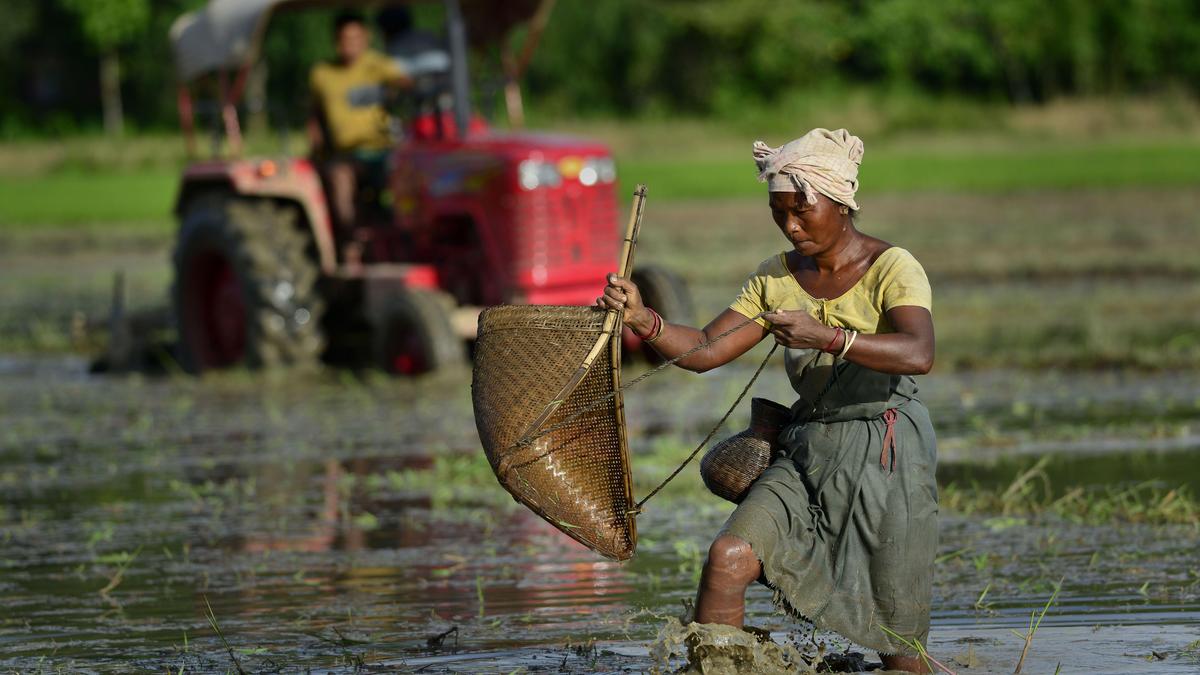
Image: The Hindu
Context
Women farmers in India face significant challenges due to legal, social, and cultural barriers that hinder their access to land and resources. Despite legal reforms aimed at improving their rights, the reality on the ground remains starkly different, with many women lacking formal recognition as farmers.
What The Author Says
The authors argue that systemic barriers prevent women farmers in India from accessing their rights and recognition, leading to inequities in agriculture and nutrition.
Key Arguments
📗 Facts
- The National Food Security Act in India guarantees subsidised cereals and nutritional support for vulnerable groups.
- Women in rural India often manage farm operations without legal titles, limiting their access to credit and resources.
- Anaemia rates among women of reproductive age in India remain alarmingly high, indicating a public health crisis.
📕 Opinions
- The authors believe that without formal recognition, women farmers cannot fully benefit from agricultural policies.
- They argue that the current food systems fail to address the nutritional needs of women and children adequately.
Counterpoints
Economic constraints limit the feasibility of implementing these reforms.
Some argue that the government may lack the resources to enforce legal reforms and support women farmers effectively.
Cultural norms may resist changes to land ownership laws.
Deep-rooted patriarchal practices could hinder the acceptance of women’s rights to land and resources, making reforms challenging.
Not all women may want formal recognition as farmers.
Some women may prefer traditional roles or may not seek the responsibilities that come with formal farming recognition.
Bias Assessment
The authors advocate strongly for women's rights but may overlook the complexities of cultural resistance.
Why This Matters
As the International Year of the Woman Farmer approaches in 2026, addressing the systemic inequalities faced by women farmers is crucial for improving food security and nutrition in India. Recent trends indicate that women's contributions to agriculture are not reflected in policies or practices.
🤔 Think About
- •How can legal reforms be effectively implemented in rural areas?
- •What role do cultural attitudes play in women's access to land?
- •Could alternative agricultural models empower women without formal recognition?
- •What strategies can be employed to ensure digital tools reach all women farmers?
Opens original article on The Hindu
Advertisement
In-Article Ad