




The Benefits of Historical Home Ventilation and Its Lessons for Modern Construction
Why Homes Used to Be Less Airtight And How That Helped
 The Economic Times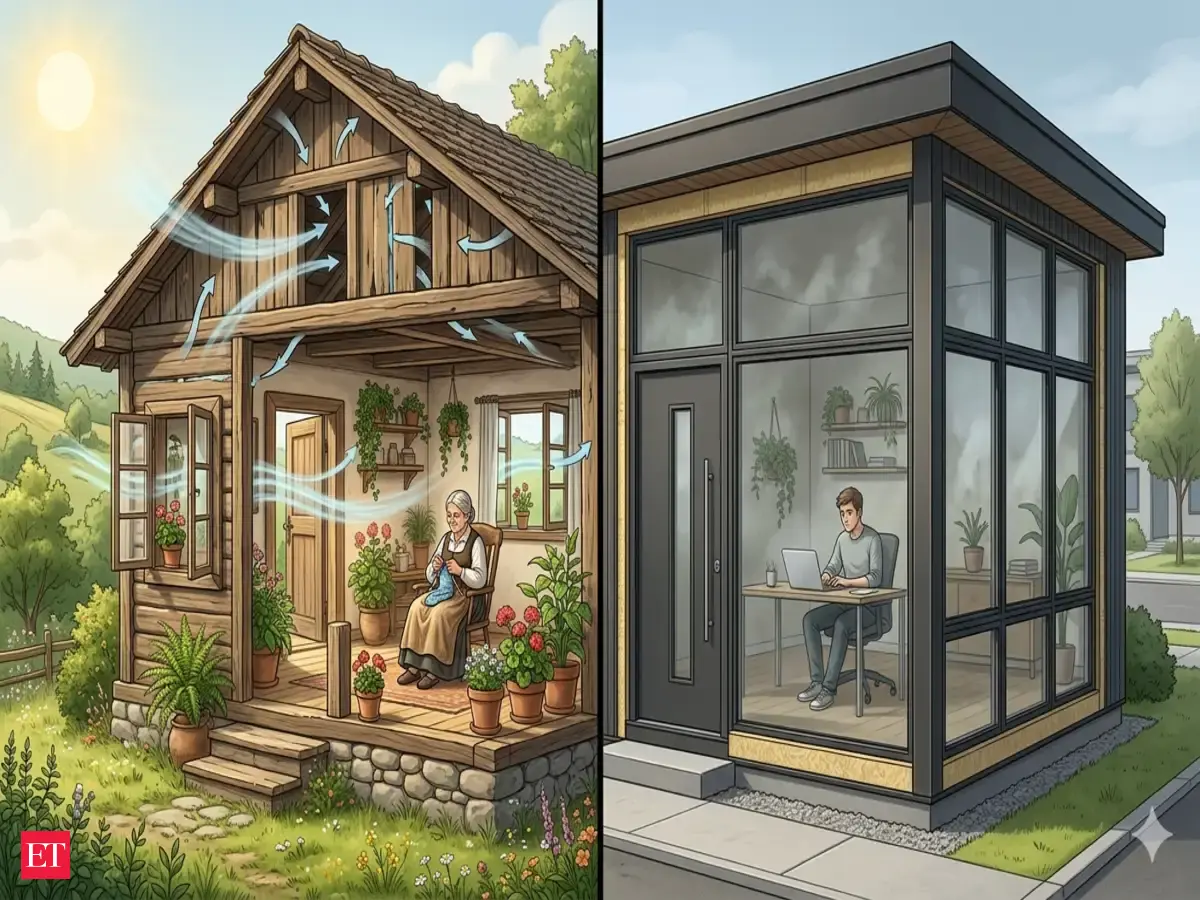
Image: The Economic Times
Historically, homes were less airtight, allowing natural ventilation that improved indoor air quality and health. While modern airtight homes enhance energy efficiency, they require effective ventilation systems to prevent indoor pollution. Balancing these aspects is crucial for healthier living environments.
- 01Older homes had natural ventilation that improved indoor air quality.
- 02Modern airtight homes can trap pollutants without proper ventilation.
- 03Research shows that historical building practices can inform healthier modern designs.
- 04The energy efficiency of new homes necessitates reliance on mechanical ventilation systems.
- 05Finding a balance between energy efficiency and indoor air quality is essential.
Advertisement
In-Article Ad
Historically, homes were built with significant air leakage, allowing natural ventilation that helped dilute indoor pollutants from sources like wood fires and gas lamps. Research indicates that homes built before the 1970s had air change rates of 5–10 ACH (air changes per hour), compared to modern standards that aim for 2 ACH or lower. This natural airflow, while inefficient in terms of energy use, played a crucial role in maintaining indoor air quality and occupant health. Studies from institutions like Lawrence Berkeley National Laboratory and Imam Abdulrahman Bin Faisal University highlight the health benefits of such ventilation methods, showing reductions in airborne virus transmission by up to 80% in traditional buildings. However, the energy crisis of the 1970s shifted focus towards airtight construction, which can lead to indoor air quality issues if not paired with adequate ventilation systems. Modern standards, such as ASHRAE 62.2, emphasize the importance of balancing airtightness with proper ventilation to ensure healthy indoor environments. The evolution of housing design suggests a need for a middle ground, combining energy efficiency with effective ventilation strategies to create healthier homes.
Advertisement
In-Article Ad
The findings suggest that homeowners should consider both energy efficiency and air quality when renovating or building new homes.
Advertisement
In-Article Ad
Read the original article
Visit the source for the complete story.