




China-Pakistan Peace Initiative: Implications for Global Trade and Stability in West Asia
Expert Explains | What the China-Pakistan peace plan for West Asia says about China’s stakes and global trade
 The Indian Express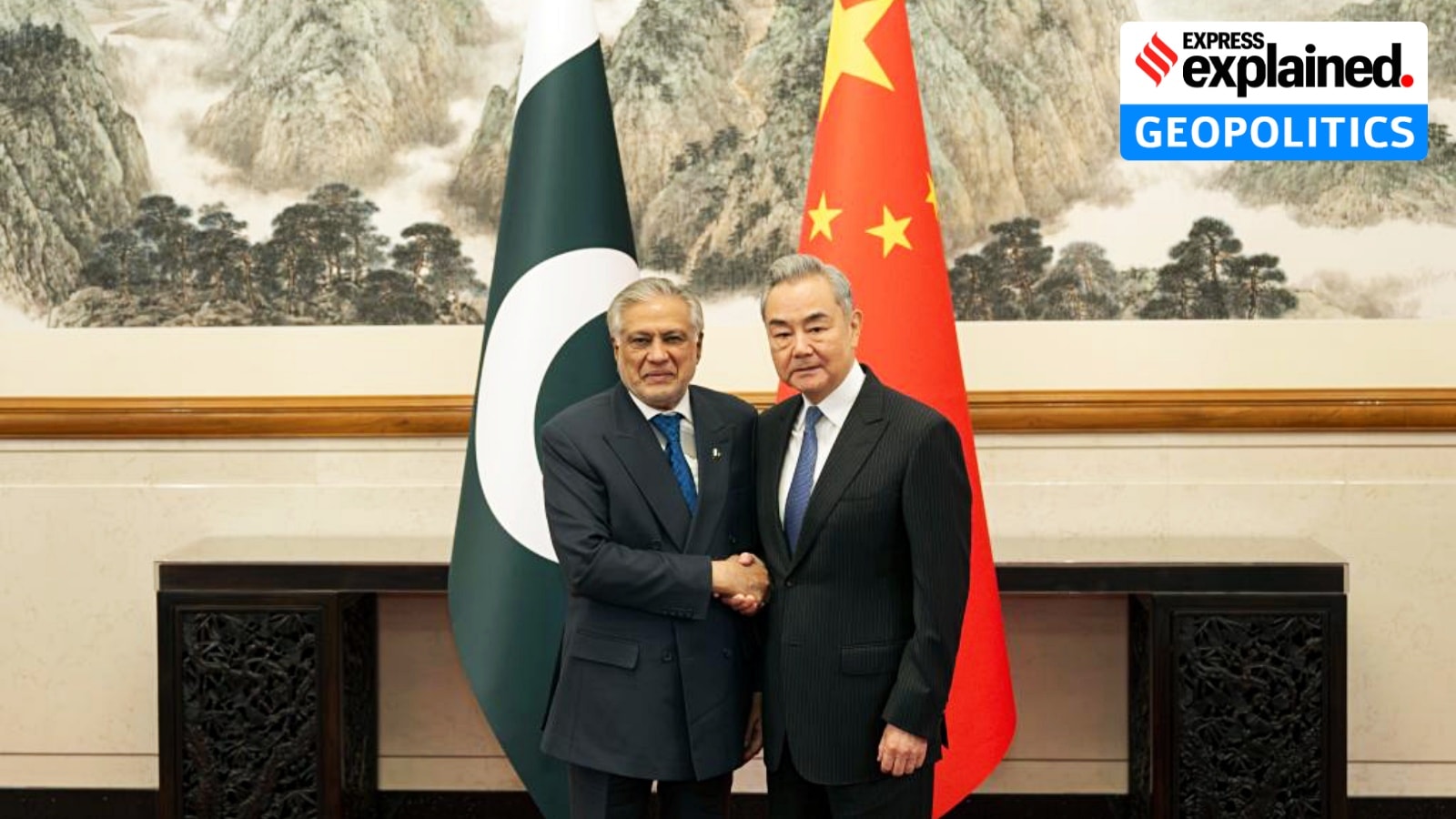
Image: The Indian Express
China and Pakistan have proposed a joint peace initiative aimed at de-escalating tensions in West Asia, emphasizing maritime stability and humanitarian access. This move reflects China's shift toward a more active diplomatic role in the region, driven by economic interests and the need to secure vital trade routes.
- 01China and Pakistan's peace plan emphasizes maritime stability and humanitarian access.
- 02The initiative marks a significant shift in China's diplomatic engagement in West Asia.
- 03China's economic interests in the region are tied to its connectivity projects, including the Belt and Road Initiative.
- 04The proposal aims to mitigate disruptions in critical maritime chokepoints like the Strait of Hormuz.
- 05China's involvement reflects a broader geopolitical shift as the U.S. recalibrates its role in the region.
Advertisement
In-Article Ad
In response to ongoing conflicts disrupting maritime routes in West Asia, China and Pakistan have unveiled a joint peace initiative that calls for a ceasefire and the protection of commercial shipping. This proposal, announced recently, signifies a notable shift in China's diplomatic posture, moving from limited engagement to a more proactive role in crisis management. The plan outlines a five-point framework for de-escalation, focusing on humanitarian access and multilateral dialogue, particularly through the United Nations. It aims to stabilize maritime routes rather than provide a detailed political settlement, indicating a mechanism for crisis management rather than outright conflict resolution.
China's growing involvement in West Asia is driven by its economic interests, particularly its dependence on stable energy supplies from countries like Iran and Saudi Arabia. Disruptions in key chokepoints such as the Strait of Hormuz have raised concerns over supply chain stability and shipping costs, prompting China to act. The initiative also reflects a shift toward Global South-led diplomacy, with China leveraging its position on the UN Security Council and Pakistan's regional access to bolster its influence.
As the U.S. recalibrates its engagement in the region, China’s initiative can be seen as an effort to expand its diplomatic influence amid growing instability. The proposal highlights the need to address vulnerabilities in maritime trade routes, particularly as tensions in the Bab el-Mandeb Strait also threaten global shipping. This evolving landscape underscores the importance of diversifying trade routes and reducing reliance on vulnerable chokepoints, a lesson China appears to be taking from recent events in West Asia.
Advertisement
In-Article Ad
The peace initiative could stabilize key maritime routes crucial for trade, benefiting countries reliant on energy imports and exports in the region.
Advertisement
In-Article Ad
Reader Poll
Do you believe the China-Pakistan peace initiative will effectively stabilize West Asia?
Connecting to poll...
More about United Nations
Former IAEA Chief Calls for Urgent Diplomatic Action Amid US-Iran Tensions
News 18 • Apr 5, 2026
Iran Warns U.S.-Israeli Strikes on Bushehr Nuclear Plant Could Lead to Radioactive Fallout
News 18 • Apr 5, 2026

Haiti Massacre Claims Lives as International Forces Prepare to Intervene
The New York Times • Apr 5, 2026
Read the original article
Visit the source for the complete story.