



Reevaluation of Ancient Fossil Reveals Misclassification of Oldest Octopus
Oldest octopus fossil found to not be an octopus
 Ars Technica
Image: Ars Technica
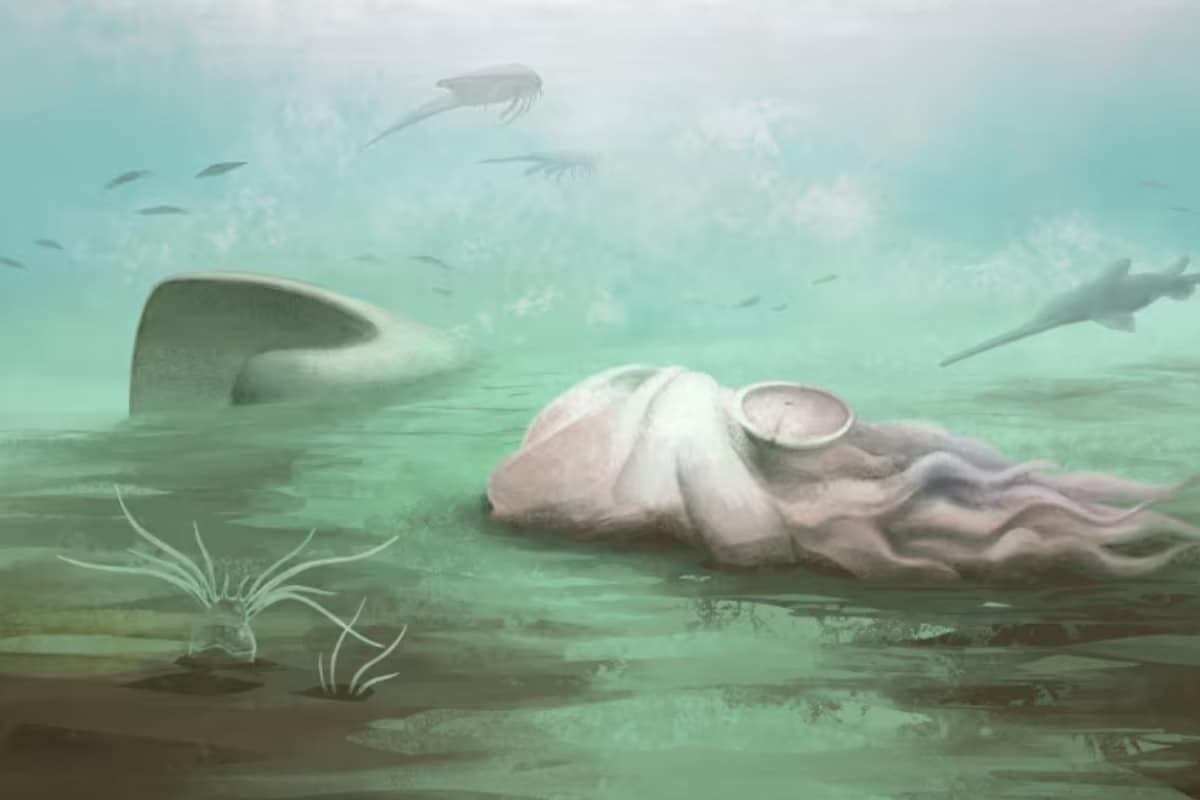
The fossil previously identified as the oldest known octopus, Pohlsepia mazonensis, has been reclassified as a decomposed nautiloid. This finding, based on advanced imaging techniques, challenges long-held beliefs about cephalopod evolution, suggesting that true octopuses diverged much later than previously thought.
- 01Pohlsepia mazonensis was thought to be the oldest octopus fossil, dating back 311 to 306 million years.
- 02Recent imaging tests revealed it is actually a decomposed nautiloid, not an octopus.
- 03This discovery alters our understanding of cephalopod evolution timelines.
- 04Fossil preservation methods contributed to the misidentification of the specimen.
- 05The Mazon Creek Lagerstätte's unique geological conditions played a significant role in fossil formation.
Advertisement
In-Article Ad
The fossil known as Pohlsepia mazonensis, previously hailed as the oldest known octopus, has been reclassified following advanced imaging tests conducted by Thomas Clements, a paleontologist at the University of Leicester, and his team. Dating back to the late Carboniferous period, approximately 311 to 306 million years ago, this specimen was long considered an anomaly in cephalopod evolution, as it suggested that crown coleoids, which include octopuses, diverged much earlier than the Jurassic period. However, the latest research revealed that Pohlsepia is not an octopus but a decomposed nautiloid. The misidentification stemmed from the unique fossilization process at the Mazon Creek Lagerstätte in Illinois, where organisms were preserved in iron-rich sediment, resulting in flat, two-dimensional impressions that made it difficult for early paleontologists to accurately interpret their anatomy. This finding significantly impacts the understanding of cephalopod evolution, indicating that true octopuses emerged much later than previously believed.
Advertisement
In-Article Ad
Advertisement
In-Article Ad
Reader Poll
How important do you think fossil reclassifications are for understanding evolution?
Connecting to poll...
Read the original article
Visit the source for the complete story.