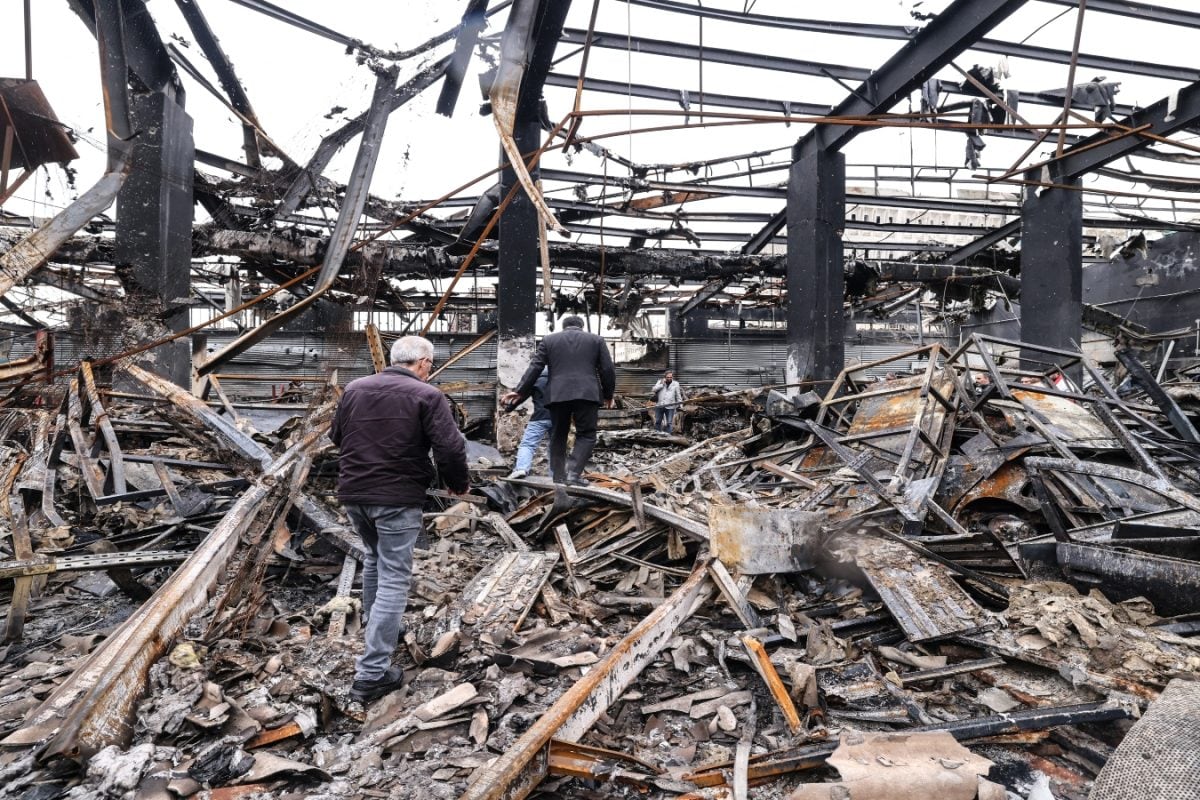
Opinion | Conflict And Capital: The Hidden Cost Of The Iran War Beneath the rhetoric of righteousness, the ongoing war in West Asia reveals a stark reality of power, profit and profound human cost. The world is praying for an early end to the Iran war, even as the opposing protagonists continue to wrap their cause in the rhetoric of righteousness: security, sovereignty, and the defence of values. Yet, beneath this moral superstructure lies a more enduring and less edifying reality: wars redistribute power and profit. They create gainers and losers in ways that are neither accidental nor always visible at first glance. The ongoing conflict involving Iran is no exception. At the apex of the gainers stand the entrenched interests of the military-industrial complex, particularly in the United States. War, after all, is not merely an act of policy; it is also an industry. The escalation of hostilities ensures a steady demand for weapons, logistics, surveillance systems, and reconstruction contracts. For powerful corporations and the billionaires who influence or own them, volatility is not always a threat — it is often an opportunity. The stock markets, sensitive to the tremors of conflict, have historically rewarded those positioned to anticipate or manipulate such disruptions. Defence stocks rise, energy markets fluctuate profitably, and speculative capital finds fertile ground. The tragedy of human suffering is thus transmuted, in certain quarters, into the arithmetic of gain. Recommended Stories - Right Word | In An Age Of Doomsday Narratives, Vatsalya Gram Offers A Story Of Hope - Opinion | Jewar Airport Puts Noida’s Economic Explosion Well Beyond Scale Of Gurugram’s Success - The 'Village Girl' Who Knew Too Much: Who Is @LifeOfPujaa And Why The Internet Is Terrified Of Her - Opinion | When Victory Defeats You: Lessons From The Epics About The Cost Of War China may also be counted among the strategic beneficiaries. Each passing day of conflict chips away at the credibility of the so-called ‘rules-based international order’ that the West has long championed. When principles appear selectively applied — invoked in one theatre and ignored in another — they lose their normative force. For Beijing, this erosion is not without consequence. It creates a permissive global environment where assertions of power, including its long-standing ambitions regarding Taiwan, can be pursued with reduced moral resistance. Simultaneously, the United States finds its attention, resources, and political capital increasingly stretched. Strategic distraction, in geopolitics, is often as valuable as direct advantage. Russia, too, stands to gain. Rising oil prices, an almost inevitable by-product of instability in the Gulf, bolster its revenues at a time when sanctions have sought to constrict them. With China as a willing and substantial market, Moscow finds a cushion against Western economic pressure. Equally significant is the shift in global focus. The invasion of Ukraine, once at the centre of international outrage, now competes with a new and arguably more volatile crisis. In the ruthless calculus of geopolitics, attention is a finite resource. As it shifts, so too does the intensity of scrutiny and condemnation. Significantly, both Russia and China will also benefit from the apparent meltdown of NATO. Then there are countries like Pakistan, whose diplomatic relevance is transiently heightened in moments of heightened tension, especially in regions proximate to its own geography. Its so-called mediatory role, even if limited in substantive impact, confers visibility and engagement with major powers. For a nation grappling with severe internal challenges, this renewed diplomatic currency is an unanticipated if short-lived bonus. The Western allies of the United States occupy a more ambiguous position. On the one hand, they remain tethered to Washington through alliances and shared strategic interests. On the other, they observe, with a degree of unease, the gradual attrition of American hegemony. If the war becomes protracted, it risks exposing the limits of U.S. power — both military and political. For European nations, in particular, this raises uncomfortable questions about their own security architectures and dependencies. If they recalibrate strategies that insulate them from US pressure in the future, they may yet gain in spite of enhanced short-term vulnerabilities. If the gainers are varied, the losers are stark and immediate. The Gulf states, geographically and economically intertwined with the theatre of conflict, face the prospect of severe collateral damage. Their infrastructure, trade routes, and internal stability are all at risk. The spectre of escalation threatens not just their economies but also their carefully maintained political equilibria. The global economy’s setbacks are many. Energy prices have surged, supply chains are disrupted, investor confidence is at a new low, and inflationary pressures have intensified. For developing countries, particularly those heavily dependent on energy imports, the impact is acute. Economic planning becomes hostage to external volatility, and hard-won gains can be swiftly eroded. The United States, despite the immediate advantages accrued by certain segments within it, faces the long-term danger of strategic overreach. History offers sobering lessons about the costs of prolonged military engagement in complex theatres. A war that lacks clear objectives or a defined endpoint risks becoming a quagmire, draining resources and eroding domestic support. Iran, of course, is bearing a a heavy burden, both to its military capabilities and civilian infrastructure. Yet, its capacity and willingness to retaliate ensure that the conflict remains dynamic and unpredictable. Far from being subdued, it continues to assert itself, turning the war — even at huge costs — into a protracted contest rather than a swift resolution. Israel, too, confronts a complex reality. Its expectation of decisively diminishing the Iranian threat appears increasingly uncertain. The very fact that it faces sustained and, at times, effective retaliation underscores the limits of military solutions in addressing deeply entrenched geopolitical rivalries. Security, in such a context, becomes an ever-receding horizon. Countries like India find themselves in a particularly vulnerable position. Heavily dependent on imports of crude oil and gas, they are exposed to the vagaries of global energy markets. Rising prices strain public finances, widen trade deficits, and complicate domestic economic management. Moreover, such conflicts test the delicate balance of foreign policy, where strategic autonomy must be maintained amid competing pressures. What, then, is the balance sheet of this war? It is not one that can be neatly tabulated in columns of profit and loss. The gainers, for the most part, are those who operate at a remove from the battlefield — financial actors, strategic observers, and opportunistic states. The losers, in contrast, are immediate and visible: nations caught in the crossfire, economies thrown into disarray, and, above all, ordinary people whose lives are on the line. (The writer is a former diplomat, an author, and a politician. Views expressed in the above piece are personal and solely those of the author. They do not necessarily reflect News18’s views.)


 News 18