

)

New Zealand Faces Fuel Crisis: Government's Response Under Scrutiny
The government has boxed itself in over fuel saving strategies – but there is a way out
 The Conversation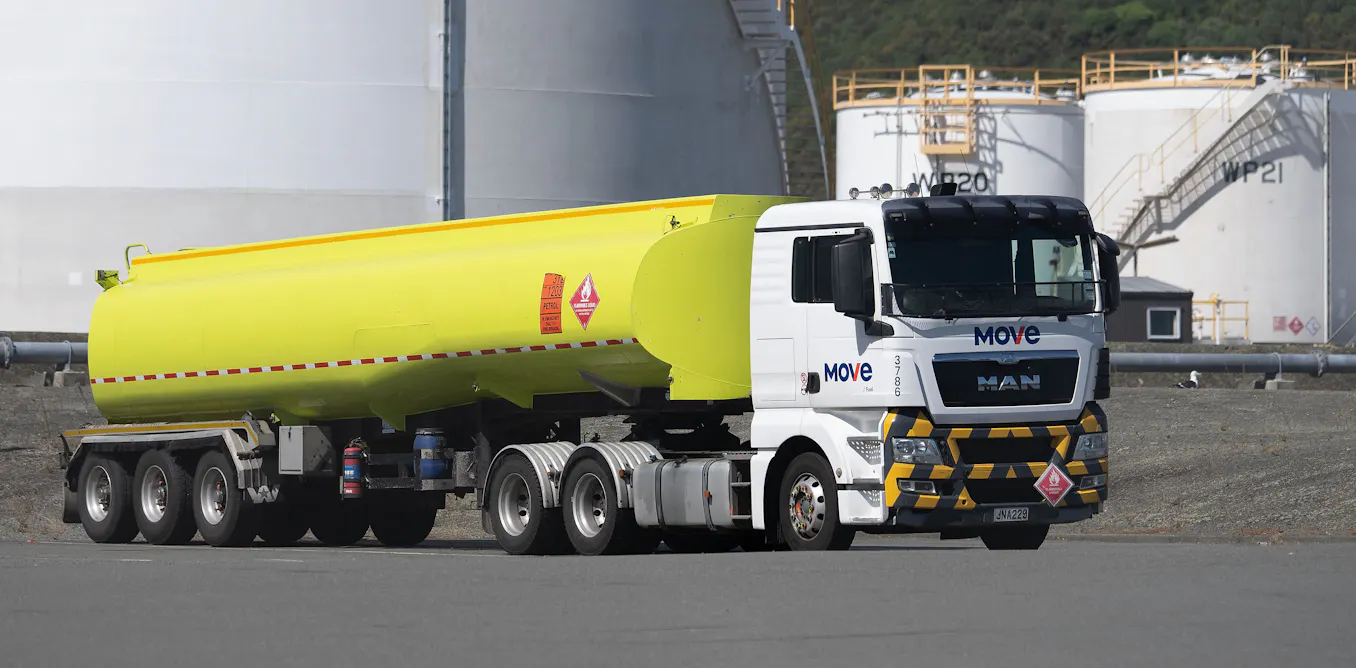
Image: The Conversation
New Zealand is facing a fuel crisis with only 27 days of petrol and 17 days of diesel supply. While petrol prices exceed NZ$3 per litre, the government’s response has been criticized for lacking effective demand-side strategies, despite the need for urgent measures to ensure energy security.
- 01New Zealand has limited fuel reserves, with 27 days of petrol and 17 days of diesel.
- 02Petrol prices have surged above NZ$3 per litre, with diesel costs now higher.
- 03Government's response includes a NZ$50 tax credit but lacks substantial demand-side measures.
- 04Public transport and fleet electrification could significantly reduce fuel consumption.
- 05Political constraints hinder effective crisis response strategies.
Advertisement
In-Article Ad
New Zealand is grappling with a significant fuel crisis, with only 27 days of petrol and 17 days of diesel available, amid rising prices that now exceed NZ$3 per litre for petrol. The country heavily relies on imports from South Korea and Singapore, making it vulnerable to global oil disruptions. While the government has introduced a NZ$50-per-week tax credit for families to alleviate fuel costs, critics argue that this approach falls short. Effective demand-side strategies, such as reducing public transport fares and promoting cycling, have been largely dismantled by the current government, which has focused on higher fare recovery targets and reduced funding for cycling infrastructure. The International Energy Agency suggests that demand reduction is crucial during oil shocks, yet New Zealand's government has not embraced these measures, potentially compromising energy security. Political reputational constraints further complicate the situation, as the government is reluctant to adopt policies perceived as ideologically opposed to its brand. However, framing necessary measures as energy security initiatives rather than subsidies could pave the way for a more effective response.
Advertisement
In-Article Ad
The fuel crisis may lead to increased transportation costs for families and businesses, affecting daily commutes and logistics.
Advertisement
In-Article Ad
Reader Poll
How should the New Zealand government respond to the fuel crisis?
Connecting to poll...
More about International Energy Agency
US-Iran Ceasefire: Implications for Global Oil Trade and Regional Stability
The Indian Express • Apr 8, 2026
Strategies for Australia to Address Its Energy Crisis Beyond Fuel Reserves
The Conversation • Apr 7, 2026
IEA Chief Warns Current Oil and Gas Crisis Exceeds Past Disruptions
The Economic Times • Apr 7, 2026
Read the original article
Visit the source for the complete story.