


NASA's Artemis II Crew Captures First Human View of Moon's Orientale Basin
'First time seen with human eyes': NASA shares full view image of Moon’s Orientale Basin captured by Artemis II crew
 Hindustan Times
Image: Hindustan Times
NASA has shared a groundbreaking image of the Moon's Orientale Basin, captured by the Artemis II crew during their mission. This marks the first time the entire basin has been seen by human eyes. The mission, featuring a diverse crew, aims to photograph the Moon's far side and break distance records for human spaceflight.
- 01The Artemis II mission is the first crewed lunar mission in over 53 years.
- 02The crew includes four astronauts: one Canadian and three Americans.
- 03This mission aims to photograph the Moon's far side and is expected to break distance records.
- 04The crew is facing a toilet malfunction but is managing with backup systems.
- 05NASA plans to establish a sustainable human presence on the Moon by 2028.
Advertisement
In-Article Ad
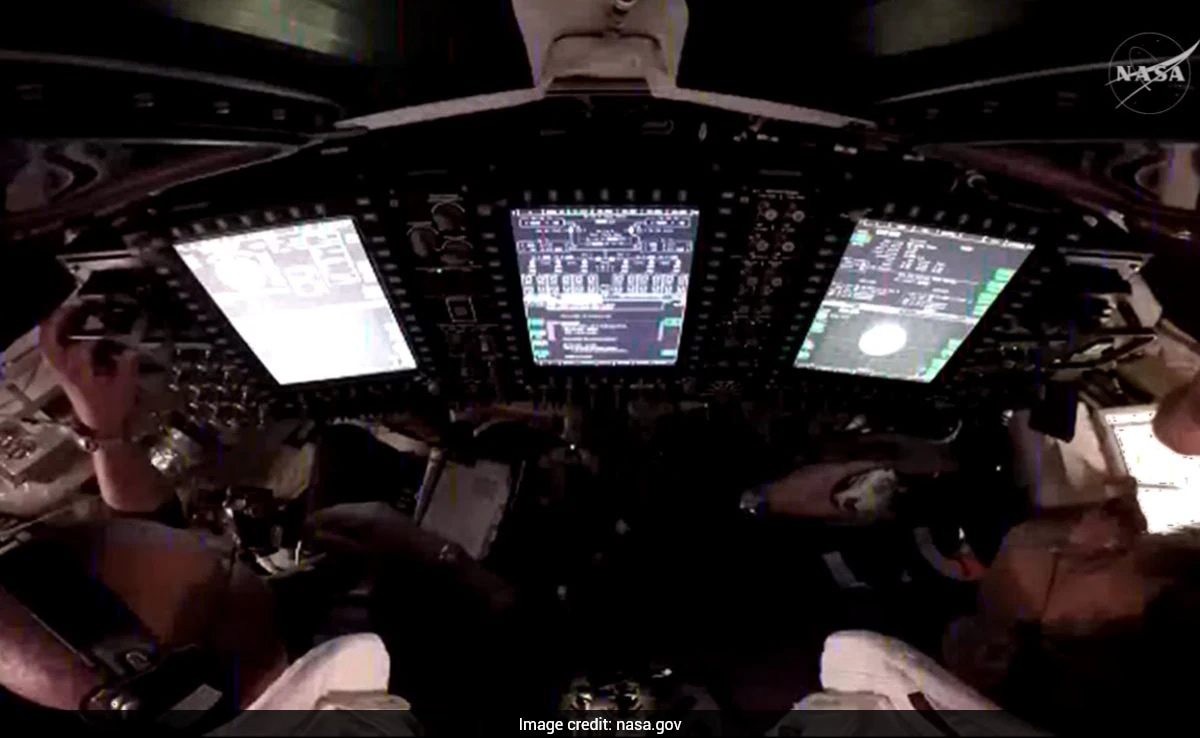
NASA's Artemis II mission has made history by capturing the first human view of the Moon's Orientale Basin, as shared in a recent image. This mission, featuring astronauts Jeremy Hansen (Canada), Victor Glover, Reid Wiseman, and Christina Koch (all from the United States), is significant as it marks the first crewed lunar mission since Apollo 17 in 1972. The Artemis II crew is aboard the Orion spacecraft, which is set to travel over 252,000 miles (400,000 km) from Earth, breaking distance records for human spaceflight. The mission aims to photograph the Moon's far side and is a stepping stone towards NASA's goal of landing astronauts near the lunar south pole by 2028. While the launch went smoothly, the crew is currently dealing with a malfunctioning toilet system, relying on backup urine collection bags until repairs can be made. Despite this challenge, mission officials report that the astronauts are doing well.
Advertisement
In-Article Ad
Advertisement
In-Article Ad
Reader Poll
What do you think about NASA's plans for lunar exploration?
Connecting to poll...
More about NASA
Read the original article
Visit the source for the complete story.