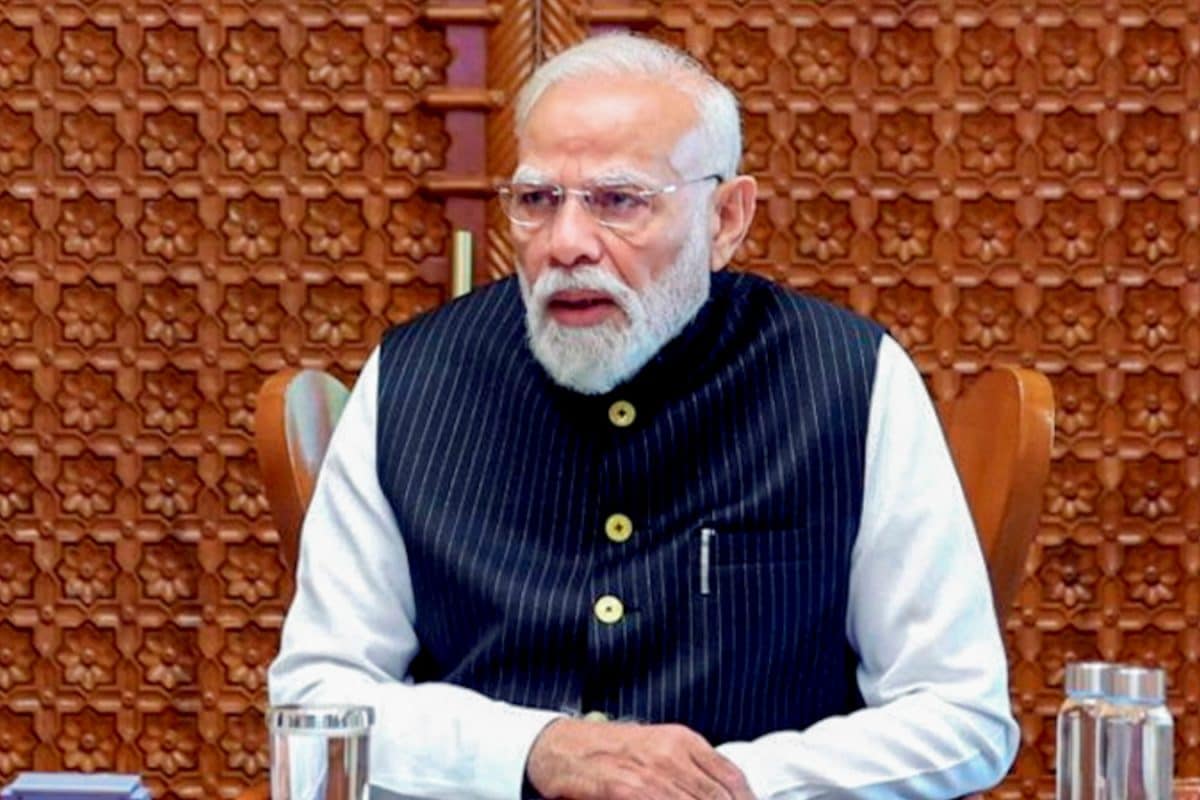
Opinion | Why India’s Discretion Trumps Grandstanding In West Asia There is wisdom in eschewing heroics for discretion in an escalating war theatre. Indian foreign policy has come a long way from effete non-alignment to deliberate detachment. An Indian industrialist — who is no more — was notorious for going back on his word. After reneging on a contract, he would say without batting an eyelid: there are three things in this world that do not stand still — the leaves of a tree, the tail of a horse and my ‘zubaan’ (tongue). Donald Trump, who is a deal-maker first and then a President, by his own admission, reminds me of that businessman. The Americans have been past masters of managing perceptions and narratives, especially when it comes to foreign policy and wars. But this time around, they seem to be failing spectacularly. It is partly because they have a mercurial President who writes his own script and changes the version even before the words have left his lips. His credibility is at an all-time low and sinking with each passing day as the war continues. Recommended Stories - Iran-US-Israel War LIVE Updates: Israel’s Kiryat Shmona On Alert As Sirens Sound After Rocket Launches - Latest: Trump warns Iran energy sites face destruction without quick deal - Latest: Trump claims Iran wants ceasefire; Iran says remarks false baseless' - Gold Prices Fall 1% After Trump's Speech: Check 22K And 24K Rates In Your City On April 2 The American media — which has traditionally toed the official line in times of military conflict — have been calling him out aggressively and refusing to cut him any slack. That does not seem to deter the President, who is brazening it out, surrounded by a coterie of pliant aides who do not have the courage to hold a mirror to the emperor standing before the world in his birthday suit. They seem to be at a loss as to how to get a reckless President off the back of a raging tiger. Iran, on the other hand, is showing no signs of buckling even after the death of the “Supreme Ayatollah" and reports of extensive damage to its military facilities and civilian casualties. It has consistently denied American claims that the Iranian leadership is desperately seeking negotiations to end the conflict. It has been indiscriminately raining rockets on American allies in the Arabian Gulf, destabilising the entire Middle East. Meanwhile, there are reports of US troops preparing for a ground assault. During all this, traffic through the Strait of Hormuz remains impaired, with Iran selectively allowing passage of vessels of “neutral" countries — presumably for a hefty price, which is going towards financing the war. While the world is staring at a recession as an inevitable consequence of America’s vanity war, India is particularly vulnerable, as much of our oil and gas supplies come through that route. Though we have been able to negotiate transit for a few ships, our overall petroleum stock position remains precarious, especially for LPG. The rising Brent crude oil index raises the spectre of an economic crisis if the war is prolonged indefinitely. Though some of it may be a panic reaction, the long queues outside LPG shops, petrol pumps and CNG outlets look ominous. The prime minister has addressed the nation, asking people to brace for a Covid-like crisis. That gave the usual suspects a handle to start peddling fears of a “lockdown", which the government was quick to quell. But the prospect of pain is real. Narendra Modi has appealed for a collective national approach to battle the challenges ahead. But that may be too much to expect of a dysfunctional Opposition, for whom fishing in troubled waters is a full-time vocation. With five states going to Assembly polls in the coming weeks, they will only get more vocal and shrill. To be fair, the ruling party would have done the same had it been on the opposite side of the aisle. Having spent over two decades in public office — first as Chief Minister and then as Prime Minister — Narendra Modi is a past master at ignoring distractions and staying on course with his chosen strategy. As one of the most pragmatic prime ministers India has seen, gifted with the native instincts of a Gujarati merchant, he is likely to remain ideologically agnostic, following a policy of strategic autonomy (self-interest) for India. That is precisely what we have seen so far — ignoring barbs and innuendos from his detractors — navigating the troubled waters of the Hormuz like a master mariner. In the meantime, there have been reports about Pakistan playing mediator between the United States and Iran, which got the knickers of compulsive critics of the present regime in a twist, terming it a failure of Indian diplomacy. As it turns out, Pakistan was being used as no more than a conduit of communication, if at all. The Indian External Affairs Minister, S. Jaishankar, struck a raw nerve among many by calling Pakistan a “dalal" state. There was nothing to be worked up about, as the word is merely a Hindi equivalent of “broker" — which is exactly what Pakistan was claiming to be (“brokering a deal"). And, if indeed money changed hands — as past US administrations have done in their dealings with Iran — a cash-strapped Pakistan would surely get its commission. But India has no such compulsions of being an uninvited guest at a wedding reception — to translate the Hindi proverb — ‘Begani Shadi Mein Abdulla Deewana’. Narendra Modi knows this well. He was earlier mocked for not signing the trade deal with the US when countries like Malaysia did so. The way Trump turned that agreement on its head at the slightest provocation vindicated Modi’s decision to pace the negotiations. The rest of the world — including the NATO allies of the United States — understands this well. So, they are maintaining a deliberate distance from Trump’s adventurism, waiting for the drama to unfold in its natural course. India too will be better off securing its national interest in a complex and fractured multipolar world rather than playing peacemaker between a mercurial modern hegemon and a theocratic regime that is waging a civilisational war of existence. There is wisdom in eschewing heroics for discretion in an escalating war theatre. Indian foreign policy has come a long way from effete non-alignment to deliberate detachment. Sandip Ghose is a writer and public commentator. His X handle is @SandipGhose. Views expressed in the above piece are personal and solely those of the author. They do not necessarily reflect News18’s views.
)
)
 News 18