



Supreme Court's Stay on UGC Regulations Highlights Caste Discrimination Issues in Higher Education
Limits of neutrality in addressing caste
 The Hindu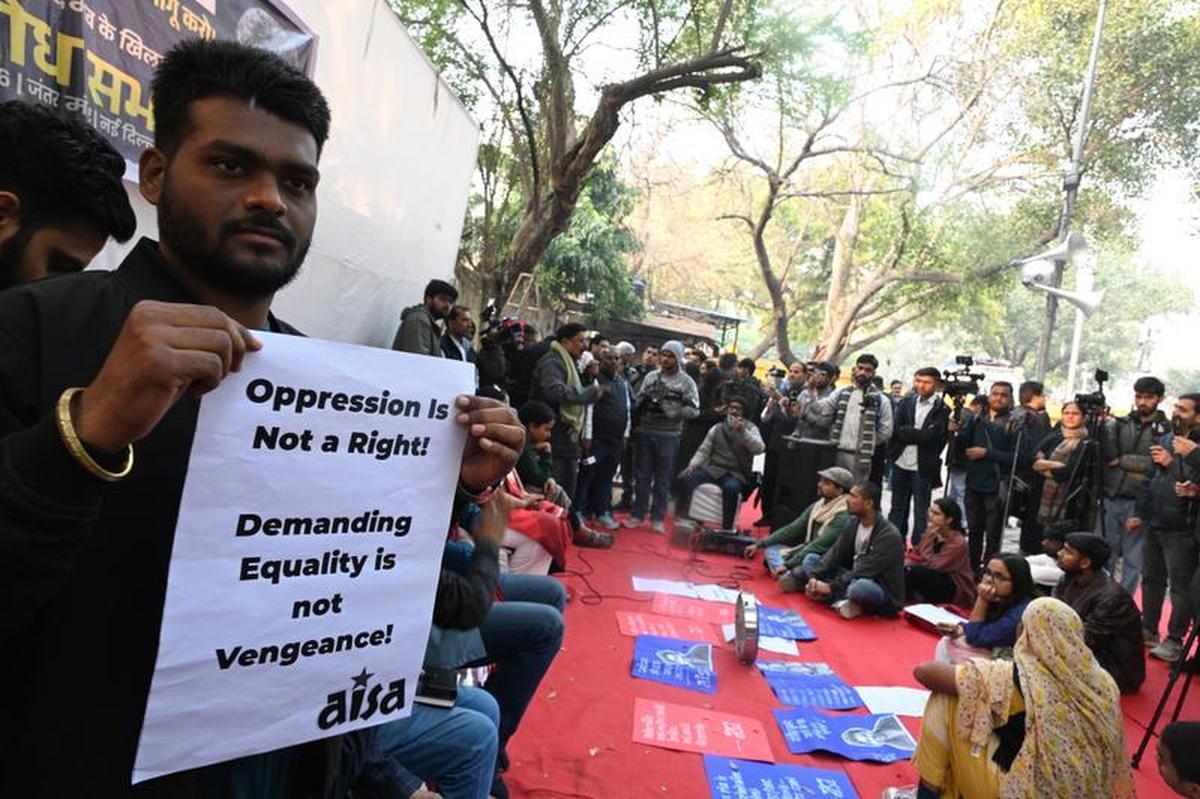
Image: The Hindu
The Supreme Court's interim stay on the UGC Promotion of Equity in Higher Education Institutions Regulation, 2026, emphasizes ongoing caste-based discrimination in Indian educational institutions. Critics argue that a caste-neutral definition of discrimination undermines the structural inequalities faced by marginalized groups, highlighting the need for effective implementation of existing regulations to ensure equality and dignity.
- 01The Supreme Court's stay addresses caste discrimination in higher education.
- 02Caste-based discrimination is defined specifically to protect marginalized groups.
- 03A caste-neutral approach risks diluting protections against systemic oppression.
- 04Effective implementation of UGC regulations is crucial for addressing discrimination.
- 05The focus should be on accountability and enforcement rather than abstract neutrality.
Advertisement
In-Article Ad
The Supreme Court of India has issued an interim stay on the UGC Promotion of Equity in Higher Education Institutions Regulation, 2026, which arose from the case of Abeda Salim Tadvi v Union of India, focusing on caste-based discrimination in educational settings. The regulations specifically define caste-based discrimination to protect members of Scheduled Castes, Scheduled Tribes, and Other Backward Classes, emphasizing that caste is a persistent structure of marginalization. Critics argue that adopting a caste-neutral definition would undermine the recognition of systemic inequalities and dilute the law's effectiveness in addressing caste discrimination. The Constitution allows for differential treatment to remedy historical disadvantages, and a caste-neutral approach would ignore the hierarchies inherent in caste systems. The article stresses the importance of enforcing existing regulations and ensuring institutional accountability to truly achieve equality and dignity for marginalized students in higher education. Strengthening the UGC framework is essential to prevent caste-based harm and ensure that institutions are held accountable for their responses to discrimination.
Advertisement
In-Article Ad
The stay on UGC regulations highlights the need for effective measures to combat caste discrimination in educational institutions, impacting students from marginalized communities.
Advertisement
In-Article Ad
Reader Poll
Do you believe that caste-based discrimination is adequately addressed in higher education?
Connecting to poll...
Read the original article
Visit the source for the complete story.