




Exploring the Meaning and Usage of 'Ineffaceable'
Word of the Day: Ineffaceable
 The Economic Times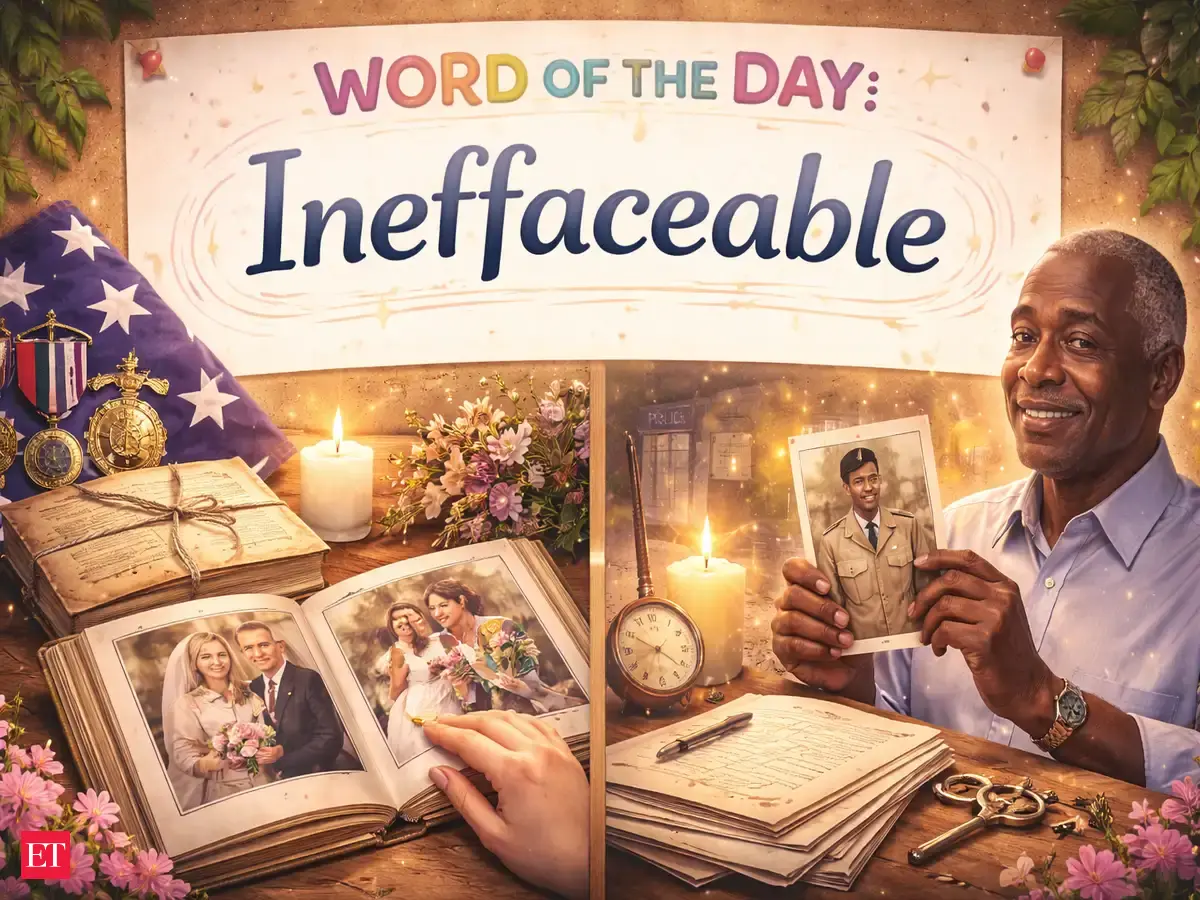
Image: The Economic Times
Today's Word of the Day is 'ineffaceable', an adjective describing something that cannot be erased or forgotten. Originating from Latin, it conveys emotional depth and permanence, making it relevant in literature and reflective writing. Its synonyms include 'indelible' and 'everlasting'.
- 01'Ineffaceable' refers to something that cannot be erased or forgotten.
- 02The word originates from the Latin 'ineffaceabilis', meaning 'not able to be wiped out'.
- 03Commonly used in literature and journalism to describe lasting impressions.
- 04Synonyms include 'indelible', 'permanent', and 'unforgettable'.
- 05'Ineffaceable' captures emotional depth and is effective in reflective writing.
Advertisement
In-Article Ad
'Ineffaceable' is an adjective that denotes something that cannot be erased, removed, or forgotten. Derived from the Latin 'ineffaceabilis', it emphasizes permanence and emotional depth, making it particularly relevant in literature, journalism, and reflective writing. The term entered the English language in the 16th century, retaining its original meaning while gaining a figurative sense that often relates to memories and emotions that endure. Synonyms such as 'indelible', 'permanent', and 'unforgettable' highlight its emphasis on continuity, while antonyms like 'erasable' and 'temporary' reflect impermanence. In contemporary usage, 'ineffaceable' describes significant memories, emotional experiences, and cultural impacts that leave lasting impressions. Its emotional resonance allows for varied applications, from journalistic narratives to creative writing, where it conveys depth and sophistication. Ultimately, 'ineffaceable' stands out as a powerful expression of permanence, bridging language and emotion.
Advertisement
In-Article Ad
Advertisement
In-Article Ad
Reader Poll
How often do you use the word 'ineffaceable' in your writing?
Connecting to poll...
Read the original article
Visit the source for the complete story.