




Controversy Surrounds CBSE's New Three-Language Formula Amid Accusations of Hindi Imposition
CBSE’s three-language formula: The controversy, and why some states are calling it ‘Hindi imposition’
 The Indian Express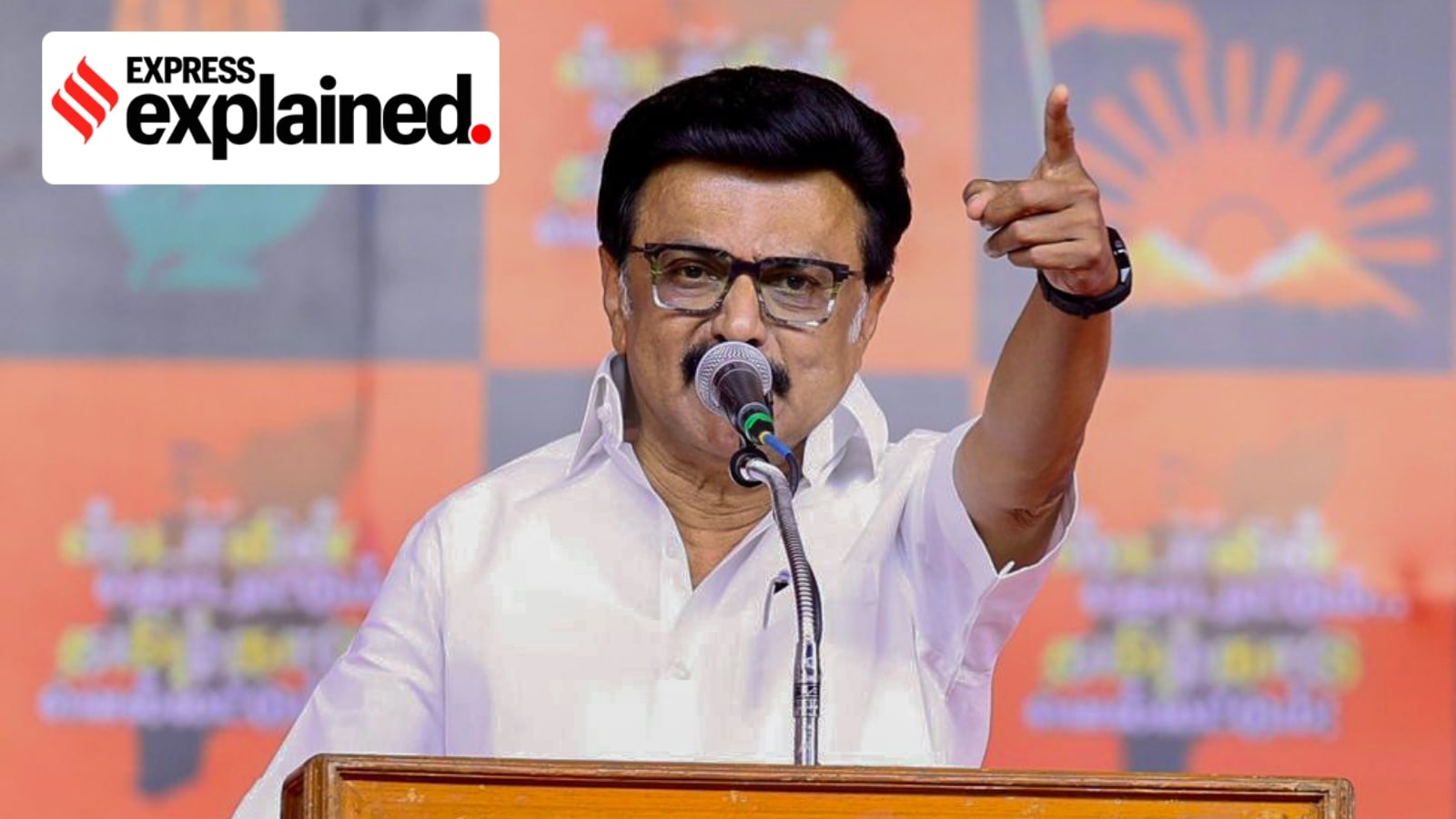
Image: The Indian Express
The Central Board of Secondary Education (CBSE) has introduced a new curriculum requiring students to learn three languages, sparking controversy, particularly in Tamil Nadu. Critics, including Tamil Nadu Chief Minister MK Stalin, argue this policy promotes Hindi at the expense of regional languages, while Union Education Minister Dharmendra Pradhan defends it as a means to promote multilingualism.
- 01CBSE's new curriculum mandates learning three languages from class 6 to 10.
- 02Tamil Nadu's Chief Minister MK Stalin claims the policy is an attempt at 'linguistic imposition'.
- 03Union Education Minister Dharmendra Pradhan argues the policy promotes all languages equally.
- 04The three-language formula has faced opposition not only in Tamil Nadu but also in Karnataka.
- 05The NEP 2020 allows states to choose the languages taught, ensuring at least two are Indian.
Advertisement
In-Article Ad
Last week, the Central Board of Secondary Education (CBSE) unveiled a new curriculum aligned with the National Education Policy (NEP) 2020, which includes a controversial three-language formula. This requires students to learn three languages from class 6 to class 10, with at least two being Indian languages. Tamil Nadu Chief Minister MK Stalin criticized the initiative as an 'attempt at linguistic imposition', suggesting it effectively mandates Hindi learning in non-Hindi speaking regions. In response, Union Education Minister Dharmendra Pradhan defended the policy, asserting it aims to promote multilingualism and does not undermine regional languages. The NEP 2020 allows states to select the specific languages, provided they include at least two native to India. This has led to resistance in Tamil Nadu, where schools traditionally teach only Tamil and English, and in Karnataka, where the state government favors a two-language policy. The controversy raises questions about language education in India's diverse linguistic landscape and the balance between promoting national languages and preserving regional identities.
Advertisement
In-Article Ad
The new curriculum could alter language education significantly in Tamil Nadu, affecting students' language proficiency and cultural identity.
Advertisement
In-Article Ad
Reader Poll
Do you support the implementation of the three-language formula in schools?
Connecting to poll...
More about Central Board of Secondary Education
Read the original article
Visit the source for the complete story.