


)
Iran's Foreign Minister Seyed Abbas Araghchi Critiques Trump’s Policies Amid Ongoing Conflict
From Mocking 'Stone Age' To Slamming 'America First': 5 Times Iran's Araghchi Took Jibe At Trump
 News 18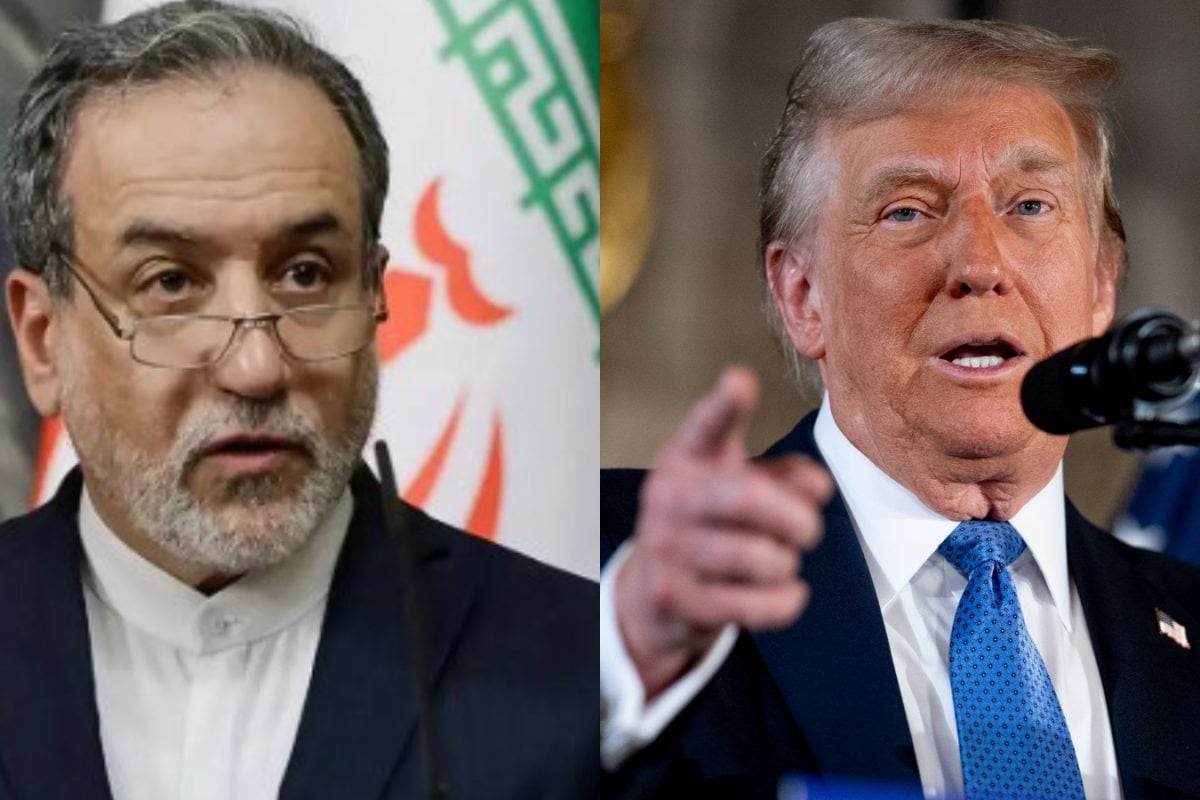
Image: News 18
Iranian Foreign Minister Seyed Abbas Araghchi has sharply criticized U.S. President Donald Trump's remarks and policies, including the 'America First' agenda and military actions in the Middle East. His comments reflect Iran's stance amid escalating tensions and military operations in the region.
- 01Seyed Abbas Araghchi criticized Trump’s 'stone age' comments, highlighting the importance of oil in the Middle East.
- 02He condemned Trump's 'America First' policy as detrimental, linking it to unnecessary wars.
- 03Araghchi warned of an 'Israel First tax' impacting the U.S. economy due to military spending.
- 04He accused the U.S. of hypocrisy in its dealings with India regarding oil imports from Russia.
- 05Araghchi stated that failed nuclear negotiations were due to the U.S.'s lack of technical understanding.
Advertisement
In-Article Ad
In response to U.S. President Donald Trump's remarks about Iran being pushed 'back to the stone age,' Iranian Foreign Minister Seyed Abbas Araghchi used sarcasm to highlight the significance of oil in the region. He questioned whether Americans truly wish to regress to such a time. Araghchi's critique extended to Trump's 'America First' policy, which he argued leads to unnecessary wars and imposes burdens on both Americans and Iranians. He also warned that a proposed $200 billion budget for military actions against Iran would result in a significant 'Israel First tax' on the U.S. economy, attributing this financial burden to the influence of Israeli leaders. Furthermore, he criticized the U.S. for its contradictory stance on oil imports, claiming it bullied India into reducing imports from Russia while now seeking global cooperation to purchase Russian oil. Lastly, Araghchi pointed to the failure of nuclear negotiations as a result of the U.S.'s lack of technical knowledge, emphasizing that factual understanding is crucial for diplomatic progress.
Advertisement
In-Article Ad
The ongoing conflict and U.S. military spending could lead to economic repercussions for American taxpayers, as highlighted by Araghchi's comments.
Advertisement
In-Article Ad
Reader Poll
Do you support the U.S. military budget for actions in the Middle East?
Connecting to poll...
Read the original article
Visit the source for the complete story.