


Religious Conversion and Its Impact on Secularism in India
Conversion politics, the challenge to secularism
 The Hindu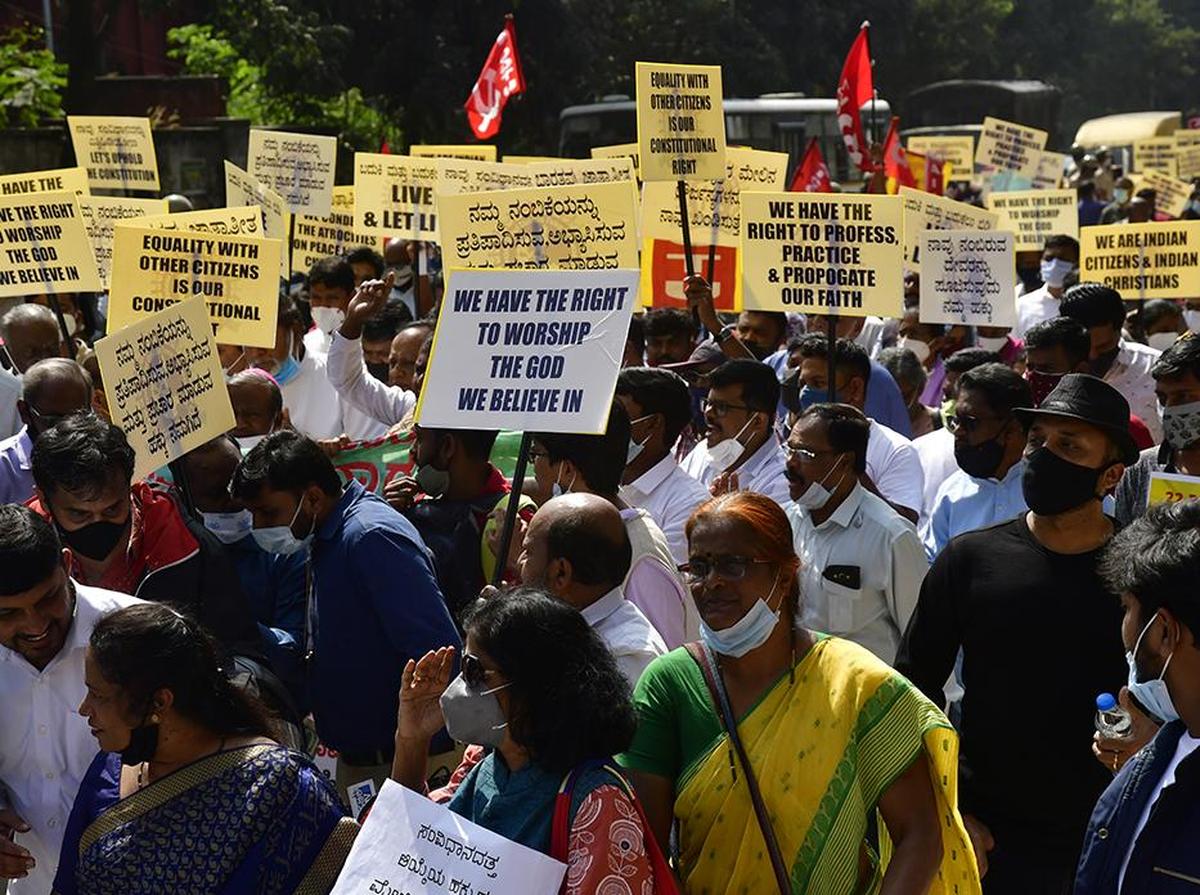
Image: The Hindu
Recent arrests of Muslims in North India, particularly in Uttar Pradesh and Uttarakhand, have raised concerns about the implications of organized religious conversions from Hinduism to Islam. This issue reflects a long-standing debate in India regarding religious freedom and the political motivations behind conversion laws that could threaten the country's secular fabric.
- 01Arrests of Muslims in North India highlight concerns over organized religious conversions.
- 02The last significant mass conversion to Islam occurred in 1981 in Tamil Nadu.
- 03Historical context includes Mahatma Gandhi's opposition to mass conversions and Dr. B.R. Ambedkar's advocacy for Dalit conversions.
- 04Anti-conversion laws have evolved, particularly under the Bharatiya Janata Party (BJP) government, expanding to include conversions to Islam.
- 05Legislation has led to legal disputes and instances of vigilantism, threatening India's secular social fabric.
Advertisement
In-Article Ad
Recent media reports indicate a rise in arrests of Muslims from various professions in North India, particularly Uttar Pradesh and Uttarakhand, on allegations of participating in organized networks facilitating conversions from Hinduism to Islam. These developments, if substantiated, could signify a shift within segments of Muslim society, although they may also be perceived as politically motivated narratives. The last notable mass conversion to Islam in India occurred in February 1981, when 558 Dalits converted in Meenakshipuram, Tamil Nadu, to escape caste oppression. Historical figures like Mahatma Gandhi and Dr. B.R. Ambedkar have shaped the discourse on religious conversion in India, with Ambedkar viewing it as an act of emancipation. Over the years, legislative attempts to regulate conversions have emerged, starting during colonial rule and continuing post-independence. Various states, particularly those governed by the Bharatiya Janata Party (BJP), have enacted or amended anti-conversion laws, expanding their scope to include conversions to Islam amid allegations of 'love jihad.' These laws have resulted in legal disputes and instances of violence, raising concerns about their impact on India's secularism. A review of these acts is deemed necessary to preserve the secular fabric of the nation.
Advertisement
In-Article Ad
The enforcement of anti-conversion laws may lead to increased tensions within communities and could result in violence, affecting the daily lives of individuals in the region.
Advertisement
In-Article Ad
Reader Poll
Should India revise its anti-conversion laws to protect religious freedom?
Connecting to poll...
More about Bharatiya Janata Party

Kejriwal Files Recusal Plea in Delhi High Court Over Excise Policy Case
Hindustan Times • Apr 6, 2026

Haryana CM Saini Addresses Farmers' Concerns and Unveils Development Projects
Hindustan Times • Apr 6, 2026
Tight Race in Davangere South Assembly Byelection as Minority Votes Split
The Hindu • Apr 6, 2026
Read the original article
Visit the source for the complete story.