



Strategic Implications of India's Women's Reservation Bill Ahead of Key Elections
Gameplan Behind Modi Govt Bringing Women Reservation Bill Now | The Inside Story
 News 18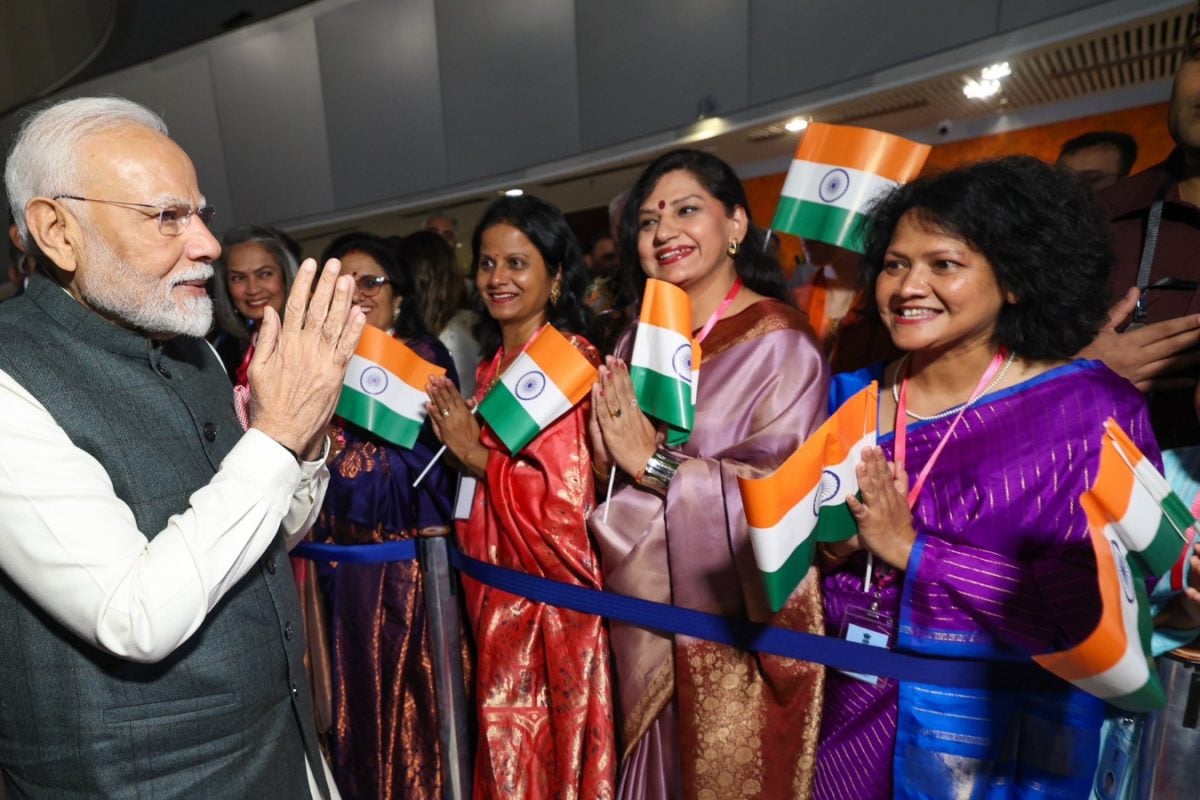
Image: News 18
The Indian government's push for the Women's Reservation Bill ahead of elections in West Bengal and Tamil Nadu is a strategic move aimed at appealing to women voters and reshaping political narratives. This initiative, linked to delimitation, seeks to enhance women's representation while placing opposition parties in a challenging position regarding their response.
- 01The Women's Reservation Bill aims to enhance women's political representation in India.
- 02The timing of the bill is strategically aligned with upcoming elections in West Bengal and Tamil Nadu.
- 03The government seeks to shift the political narrative from welfare to representation and rights.
- 04Opposition parties face a dilemma in responding to the bill without appearing anti-women.
- 05Delimitation discussions raise concerns about regional representation and federal balance.
Advertisement
In-Article Ad
The Indian government, led by Prime Minister Narendra Modi, is strategically promoting the Women's Reservation Bill ahead of elections in West Bengal and Tamil Nadu, highlighting its commitment to women's political empowerment. This initiative aims to capitalize on the growing influence of women voters, who have become a decisive electoral bloc in recent years. By positioning itself as a champion of women's representation, the government seeks to shift the political conversation from welfare schemes to structural reforms. The bill's implementation is linked to the 2029 census and delimitation, which complicates the opposition's response. With concerns about the absence of sub-quotas for Other Backward Class (OBC) women, opposition parties are caught in a bind: opposing the bill could label them as anti-women, while supporting it without caveats risks allowing the ruling Bharatiya Janata Party (BJP) to claim undue credit.
Additionally, the government's proposal for delimitation raises fears among southern states about losing parliamentary power, despite assurances that no state will lose seats in absolute terms. The DMK party in Tamil Nadu is framing this as a question of federalism, arguing that any changes should not be unilateral. As the BJP attempts to neutralize the political advantage held by regional parties, particularly in West Bengal, the long-term implications of these strategies will shape future electoral dynamics. The narratives surrounding women's empowerment and regional representation will play a crucial role in the upcoming elections.
Advertisement
In-Article Ad
The Women's Reservation Bill could significantly alter the political landscape by increasing women's representation in governance, influencing voter perceptions and party strategies in upcoming elections.
Advertisement
In-Article Ad
Reader Poll
Do you support the Women's Reservation Bill in India?
Connecting to poll...
Read the original article
Visit the source for the complete story.